
Imagine your blood vessels are like a garden hose. When you turn the water pressure up too high, the hose strains and can eventually become damaged. This is essentially what happens inside your body when you have high blood pressure. Over time, this constant force damages your arteries, heart, and kidneys.

For decades, doctors have recommended diet changes as a first line of defense against high blood pressure. The most famous of these is the DASH diet. DASH stands for Dietary Approaches to Stop Hypertension. Unlike many popular diets created for rapid weight loss, the DASH diet was designed by medical researchers specifically to test whether a certain pattern of eating could act like medicine for your blood vessels.
But how well does it actually work? Can food really replace or reduce the need for medication?
This article explores decades of clinical trials and reviews to explain exactly what the science shows about the DASH diet, who benefits the most, and where the diet falls short. Related: The Science of Managing High Blood Pressure: What Actually Works
What the Research Shows About DASH and Blood Pressure
To understand the effectiveness of the DASH diet, it helps to look at the original landmark studies and the modern reviews that followed them.
The Original Discoveries
The foundation of our understanding comes from two major clinical trials published in the late 1990s and early 2000s.
In a 1997 trial published in The New England Journal of Medicine, researchers tested a diet rich in fruits, vegetables, and low-fat dairy products, while keeping saturated fat and total fat low. They found that this combination diet reduced systolic blood pressure (sis-TOL-ik, the top number measuring pressure when the heart beats) by 5.5 mm Hg. It reduced diastolic blood pressure (die-uh-STOL-ik, the bottom number measuring pressure when the heart rests) by 3.0 mm Hg compared to a standard American diet.
For people who already had hypertension, the results were even more dramatic. Their systolic pressure dropped by 11.4 mm Hg, and their diastolic pressure dropped by 5.5 mm Hg.
In 2001, researchers took this a step further. A study in The New England Journal of Medicine tested the DASH diet at three different sodium levels. They found that combining the DASH diet with a low sodium intake (about 1,500 mg per day) resulted in the largest blood pressure drops.
Modern Confirmation
Recent, large-scale reviews confirm these early findings. A 2020 meta-analysis in Advances in Nutrition analyzed 30 randomized controlled trials with over 5,500 participants. The researchers concluded that the DASH diet significantly reduces both systolic and diastolic blood pressure across diverse populations.
Furthermore, a 2023 review in Nutrients looked at observational studies and found that high adherence to the DASH diet is associated with an approximately 19% lower risk of developing hypertension in the first place.
How This Might Work
The DASH diet does not rely on a single magic ingredient. Instead, it works through a combination of nutrients that influence how your blood vessels and kidneys function.
- Potassium, Calcium, and Magnesium: The DASH diet is naturally high in these three minerals. Potassium helps your kidneys excrete excess sodium through your urine. It also helps relax the walls of your blood vessels. Magnesium and calcium play similar roles in muscle relaxation and blood vessel health.
- Lower Sodium: Sodium pulls water into your bloodstream. More water means more fluid volume, which increases the pressure against your blood vessel walls. A 2022 review in Reviews in Cardiovascular Medicine notes that reducing salt while following the DASH diet creates a synergistic effect, lowering pressure more than either strategy alone.
- High Fiber and Antioxidants: The diet is rich in plant foods that provide fiber and antioxidants. These compounds help reduce inflammation and improve endothelial function (en-doh-THEE-lee-ul), which is how well the inner lining of your blood vessels works to control blood flow.
Who Benefits Most and Who Needs Caution
While the DASH diet is broadly recommended, research shows that certain populations experience different levels of benefit.

People with Severe Hypertension
The higher your starting blood pressure, the more the DASH diet seems to help. A 2017 analysis in the Journal of the American College of Cardiology looked specifically at baseline blood pressure. For participants with a starting systolic blood pressure of 150 mm Hg or higher, combining the DASH diet with low sodium dropped their systolic pressure by a striking 20.8 mm Hg. This magnitude of reduction is comparable to taking multiple blood pressure medications.
People Requiring Caution: Chronic Kidney Disease (CKD)
While the DASH diet is healthy for most, it requires caution for people with advanced chronic kidney disease.
A 2021 review in Nutrients highlights that as kidney function declines, the body loses its ability to filter out excess potassium and phosphorus. Because the DASH diet is very high in potassium (often over 4,000 mg per day), it can lead to hyperkalemia (hy-per-kuh-LEE-mee-uh), a dangerous buildup of potassium in the blood that can cause irregular heart rhythms. Patients with advanced CKD should always consult a nephrologist before adopting a high-potassium diet.
How This Compares To Alternatives
The DASH diet is frequently compared to other popular eating patterns, particularly the Mediterranean diet and low-carbohydrate diets. Related: Mediterranean Diet vs. Keto: What the Latest Science Shows
DASH vs. Mediterranean Diet
Both diets emphasize whole foods, plants, and lean proteins. A 2023 trial in Clinical Nutrition directly compared the DASH diet to the Mediterranean diet, with both groups also restricting salt. The researchers found that both diets significantly lowered blood pressure compared to a control group. The Mediterranean diet showed a slightly greater reduction in office systolic blood pressure, but both were highly effective overall.
DASH vs. Low-Carbohydrate Diets
For people dealing with multiple metabolic issues, low-carb diets might offer specific advantages. A 2023 trial in the Annals of Family Medicine compared a very low-carbohydrate diet to the DASH diet in adults who had hypertension, were overweight, and had prediabetes or type 2 diabetes.
Over four months, the very low-carbohydrate diet actually led to a greater improvement in systolic blood pressure (a drop of 9.77 mm Hg) compared to the DASH diet (a drop of 5.18 mm Hg). The low-carb group also saw better improvements in blood sugar control and weight loss. This suggests that for people with severe insulin resistance, carbohydrate restriction might be a highly effective alternative.
Beyond Blood Pressure: Other Health Benefits
Because the DASH diet improves overall vascular health, its benefits extend beyond just the numbers on a blood pressure monitor.
- Heart Disease and Stroke: A 2008 study in the Archives of Internal Medicine followed over 88,000 women for 24 years. The researchers found that those who most closely followed a DASH-style diet had a significantly lower risk of coronary heart disease and stroke. They also had lower levels of inflammation markers in their blood.
- Brain Health and Cognitive Decline: What is good for the heart is often good for the brain. A 2026 analysis in JAMA Neurology tracked over 150,000 participants and found that high adherence to the DASH diet was strongly associated with a lower risk of subjective cognitive decline and better objectively measured cognitive function in later life.
Where The Science Is Still Uncertain
The biggest challenge with the DASH diet is not whether it works biologically, but whether people can stick to it in the real world.
A 2020 network meta-analysis in the BMJ compared 14 popular diets. The researchers noted that while the DASH diet was among the most effective for lowering blood pressure at the 6-month mark, the benefits largely disappeared at 12 months. This is a common theme in nutrition research. As patients slowly return to their old eating habits, their blood pressure creeps back up.
To combat this, researchers are looking at new ways to support patients. For example, a 2024 trial in JMIR mHealth and uHealth tested a digital intervention using WeChat to help older adults follow the DASH diet and exercise guidelines. The digital support group saw significant improvements in systolic blood pressure and medication adherence compared to the control group, suggesting that ongoing coaching is critical for long-term success.
Common Questions About the DASH Diet
Do I have to eliminate all salt to see benefits?
No. While lower sodium (1,500 mg) produces the best results, research shows that simply dropping from a high-sodium American diet (over 3,400 mg) to a moderate level (2,300 mg) still significantly lowers blood pressure.
Is the DASH diet designed for weight loss?
The DASH diet was primarily designed for cardiovascular health, not weight loss. However, because it eliminates sugary drinks and highly processed foods, many people naturally lose weight when they adopt it.
Can I still eat meat on the DASH diet?
Yes, but the diet emphasizes lean meats like poultry and fish in moderate portions, while minimizing red meat and processed meats (like bacon or deli meats).
The Bottom Line
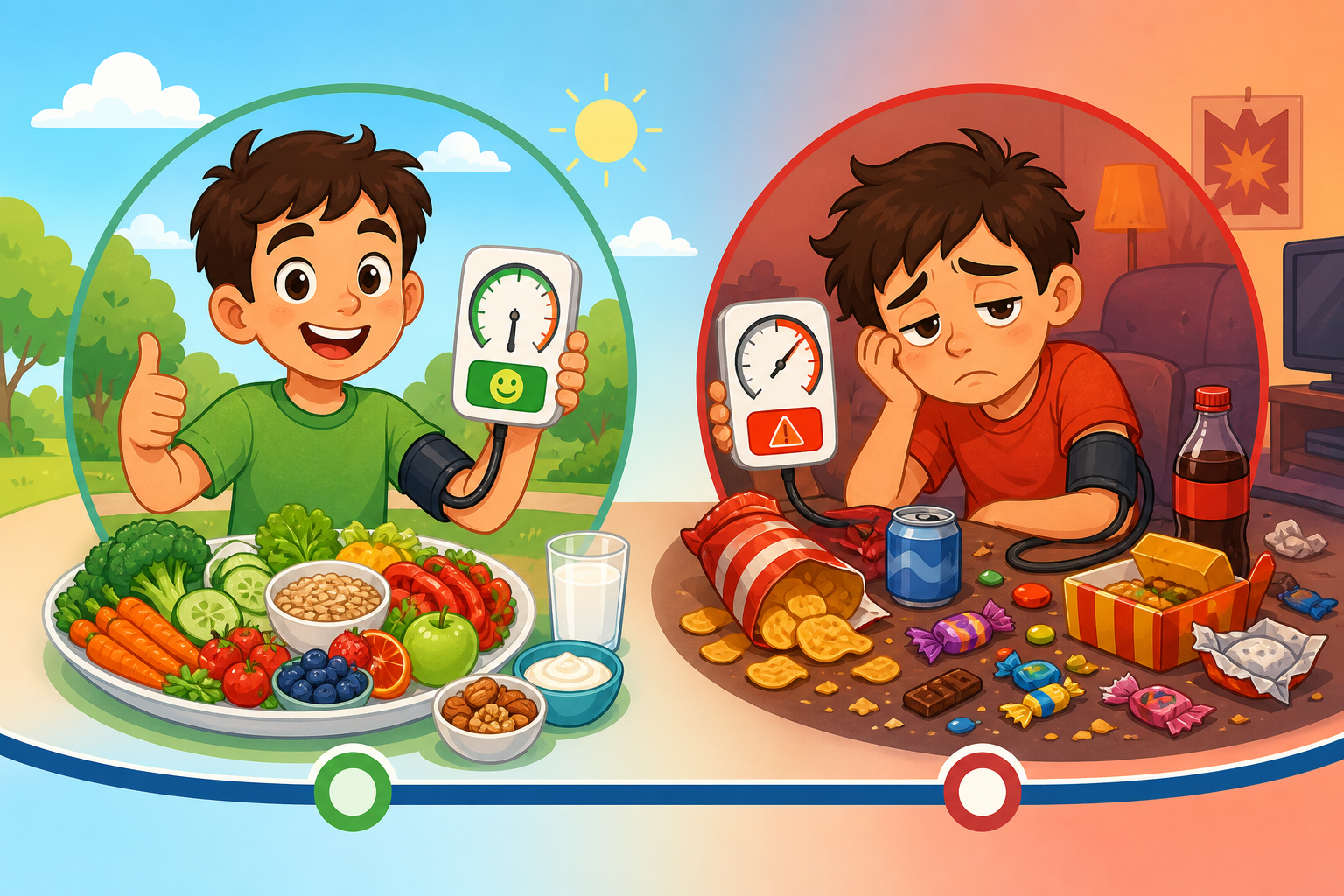
The scientific consensus on the DASH diet is remarkably strong. Decades of randomized controlled trials demonstrate that a diet rich in fruits, vegetables, and low-fat dairy, combined with reduced sodium, reliably lowers blood pressure.
For individuals with severe hypertension, the blood pressure reductions can be massive, sometimes rivaling the effects of prescription medications. Furthermore, following this eating pattern provides long-term protection against stroke, heart disease, and cognitive decline.
However, the diet is only effective as long as you actually follow it. The primary limitation of the DASH diet is long-term adherence. Additionally, people with advanced kidney disease should consult a doctor before adopting the diet due to its high potassium content. For those who struggle with blood sugar control, very low-carbohydrate diets may serve as a viable or even superior alternative.
Quick Reference: Key Studies
| Study Focus | Key Finding | Source |
|---|---|---|
| Original DASH Trial | A diet high in fruits, veg, and low-fat dairy lowered systolic BP by 5.5 mm Hg overall, and 11.4 mm Hg in hypertensive patients. | PMID 9099655 |
| DASH + Sodium Reduction | Combining the DASH diet with lower sodium intake produced greater BP reductions than either strategy alone. | PMID 11136953 |
| High Baseline BP | Patients with a starting systolic BP over 150 mm Hg saw massive drops (up to 20.8 mm Hg) on a low-sodium DASH diet. | PMID 29141784 |
| Low-Carb vs. DASH | A very low-carb diet lowered systolic BP more than the DASH diet (-9.77 vs -5.18 mm Hg) in overweight adults with diabetes/prediabetes. | PMID 37217318 |
| Long-term Adherence | Meta-analysis showed DASH is highly effective at 6 months, but benefits largely fade by 12 months as adherence drops. | PMID 32238384 |
| Cognitive Health | High adherence to the DASH diet is associated with lower subjective cognitive decline and better objective brain function. | PMID 41729538 |
Last updated: September 2026
This article synthesizes findings from peer-reviewed research. It is for educational purposes only and does not constitute medical advice. Consult a healthcare provider before starting any new regimen.


Leave a Reply