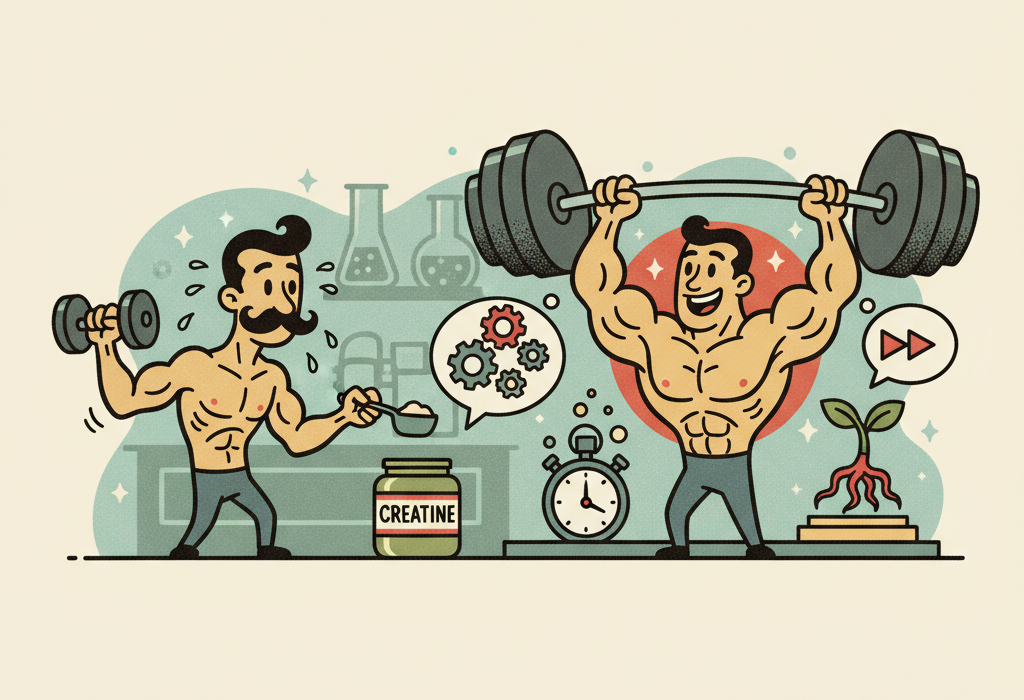
For decades, large tubs of creatine powder have been a staple in locker rooms and gyms. It is often associated with bodybuilders trying to build larger muscles. However, modern scientific research paints a much broader picture.
Creatine is not a synthetic chemical. It is a naturally occurring compound that your body makes in the liver and kidneys. You also absorb it by eating red meat and seafood. It plays a critical role in how your cells produce and use energy.
While its reputation as a sports supplement is well-earned, scientists are now exploring how creatine affects brain health, aging, and specific populations like vegetarians and women.
This article explores what peer-reviewed research actually shows about creatine, how it works, who might benefit from it, and what the evidence says about its safety.
How This Might Work
To understand why creatine matters, it helps to look at how your body produces energy.
Your cells run on a molecule called Adenosine triphosphate (uh-DEN-oh-seen try-FOS-fate), or ATP for short. You can think of ATP as a fully charged battery. When your muscles contract or your brain processes a complex thought, your cells use that ATP for energy. In the process, the ATP loses a piece of itself and becomes a depleted battery called ADP.
This is where creatine steps in. Most of the creatine in your body is stored in your muscles as Phosphocreatine (FOS-foe-KREE-uh-teen). Phosphocreatine acts like a portable power bank. It quickly donates a piece of itself to the depleted ADP, turning it back into fully charged ATP.
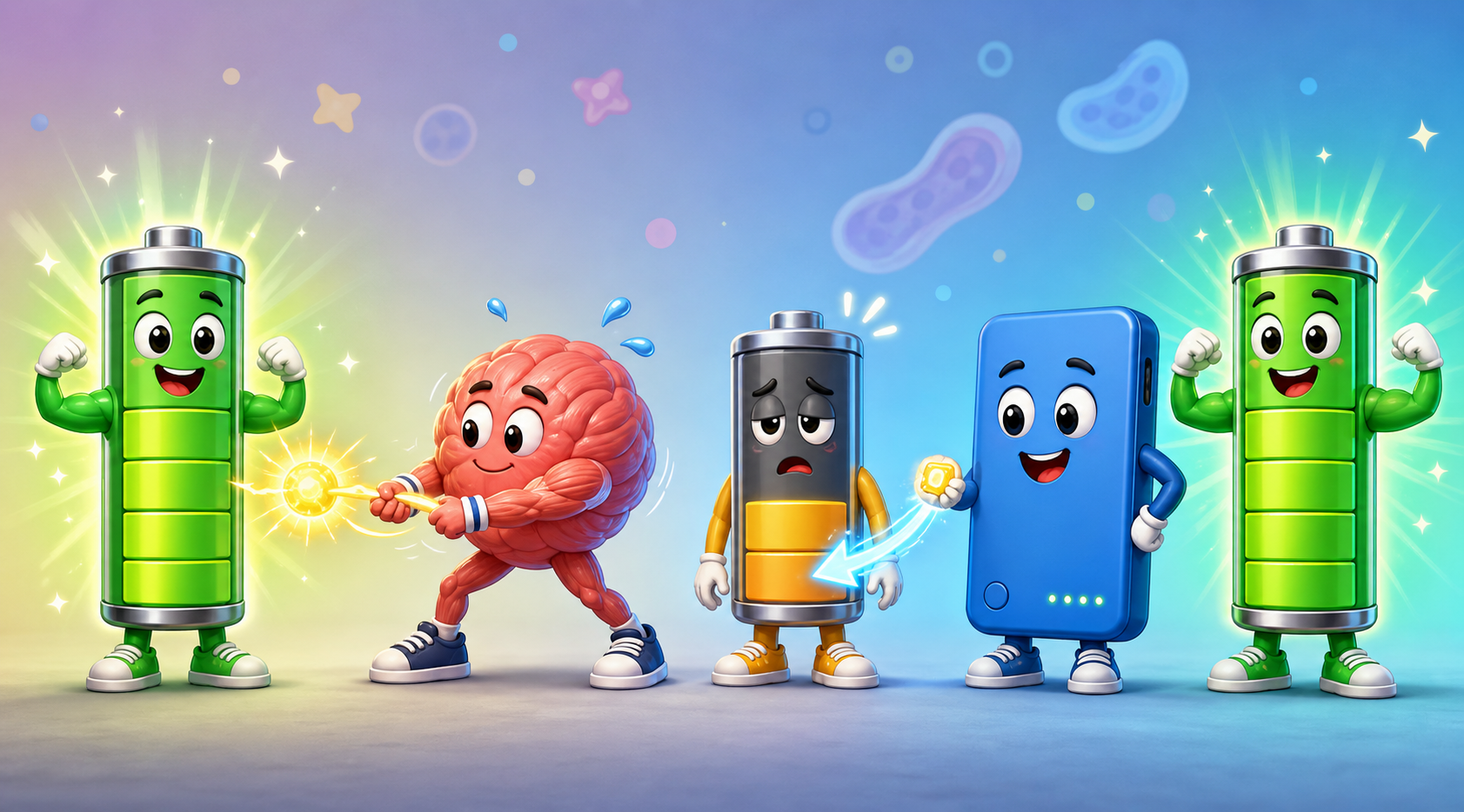
This recharging process happens in fractions of a second. By supplementing with creatine, you increase your body’s stored phosphocreatine levels by 20 to 40 percent. This allows your cells to recharge ATP faster, which is especially useful during short bursts of intense physical or mental effort.
What the Research Shows: Muscle and Athletic Performance
Creatine is one of the most thoroughly researched supplements in sports nutrition. A 2017 position stand by the Journal of the International Society of Sports Nutrition concluded that creatine monohydrate is the most effective nutritional supplement currently available to athletes for increasing high-intensity exercise capacity.
Strength and Muscle Growth
Creatine is highly effective for activities that require short, maximal bursts of energy, such as sprinting, jumping, or weightlifting.
A 2024 systematic review in Nutrients analyzed healthy adults under age 50 who combined creatine supplementation with resistance training. The researchers found that those taking creatine gained significantly more upper-body and lower-body strength compared to those taking a placebo.
Additionally, a 2023 meta-analysis in Nutrients looked at direct imaging of muscle size. The researchers found that combining creatine with resistance training promoted a small but consistent increase in regional muscle growth (hypertrophy) in both the upper and lower body.
Related: The Science of Weight Training: How Resistance Exercise Changes Your Body
Where It Falls Short
While creatine is excellent for short bursts of effort, it does not do much for endurance sports. Studies consistently show that creatine supplementation does not significantly improve performance in long-distance running or swimming. The energy systems used during prolonged aerobic exercise rely more on oxygen and stored carbohydrates or fats, rather than the rapid ATP-phosphocreatine system.

What the Research Shows: Brain Health and Cognitive Function
Your brain is a highly active organ. Although it only accounts for about 2 percent of your body weight, it consumes about 20 percent of your body’s energy. Just like your muscles, your brain relies on ATP.
Research suggests that increasing brain creatine levels may support cognitive function, particularly when the brain is under stress.
A 2018 systematic review in Experimental Gerontology evaluated multiple trials on healthy individuals. The researchers found evidence that creatine supplementation improved short-term memory and reasoning skills. However, the effects on other areas like attention and mental fatigue were mixed.
Interestingly, creatine seems to have the most significant cognitive impact when the brain is challenged. For example, a 2023 randomized controlled study in BMC Medicine found that creatine provided a small but measurable benefit for working memory and intelligence tasks. Researchers often note that cognitive improvements are most pronounced in older adults, vegetarians, or people dealing with sleep deprivation.
Related: Understanding Brain Fog and Age-Related Cognitive Decline
Who Benefits Most From Creatine
While many people can benefit from creatine, research highlights specific populations that may see more pronounced effects.
Vegetarians and Vegans
Because dietary creatine is found almost exclusively in animal products, vegetarians and vegans naturally have lower baseline levels of creatine in their muscles. A 2024 review in Nutrients notes that plant-based eaters often experience larger improvements in both physical and cognitive performance when they begin supplementing, simply because they have more room to increase their baseline stores.
Women Across the Lifespan
Historically, sports science research has focused heavily on men. However, female physiology interacts with creatine differently. Females generally have 70 to 80 percent lower endogenous creatine stores than males.
A 2025 review in the Journal of the International Society of Sports Nutrition highlights that hormonal fluctuations during the menstrual cycle, pregnancy, and menopause significantly influence how women synthesize and store creatine.
- Menstruation: During the luteal phase of the menstrual cycle, women often experience shifts in fluid balance and protein breakdown. Creatine supplementation may help maintain cellular hydration and energy availability during this time.
- Pregnancy: Growing evidence suggests that metabolic demand increases significantly during gestation. While human trials are still limited, animal studies suggest that creatine may support placental health and fetal brain development.
- Menopause: As estrogen levels decline during menopause, women face an increased risk of muscle loss and decreased bone density. A 2021 review in Nutrients notes that when combined with resistance training, creatine supplementation helps post-menopausal women preserve muscle mass and improve bone health.
Older Adults
As we age, we naturally lose muscle mass and strength, a condition known as Sarcopenia (sar-koe-PEE-nee-uh). A 2021 review in Nutrients found that older adults who take creatine while engaging in resistance training experience greater gains in muscle mass, strength, and functional capacity compared to those who only exercise. This can lead to better balance and a lower risk of falls.
Practical Guidance: How to Take Creatine
If you decide to try creatine, the scientific literature offers clear guidance on the most effective methods.
Which Type to Choose
Walk into any supplement store, and you will see various forms of creatine, including creatine ethyl ester, creatine hydrochloride, and buffered creatine.
However, a 2024 review in Nutrients confirms that creatine monohydrate remains the most extensively studied, effective, and affordable form. Studies consistently show that alternative forms do not absorb better or produce superior results compared to standard creatine monohydrate.
Dosing Strategies
There are two scientifically supported ways to increase your muscle creatine stores, as outlined in a 2013 review in Current Sports Medicine Reports:
1. The Loading Method: This involves taking 20 grams of creatine per day (divided into four 5-gram doses) for 5 to 7 days. This saturates your muscles quickly. After the loading phase, you drop to a maintenance dose of 3 to 5 grams per day.
2. The Gradual Method: This involves taking 3 to 5 grams per day from the start. It will take about 28 days to fully saturate your muscles, but it is equally effective in the long run and may reduce the chance of mild stomach discomfort.
Does Timing Matter?
A common question is whether you should take creatine before or after a workout. A 2021 review in Nutrients examined the timing of creatine supplementation. The researchers found emerging evidence suggesting that taking creatine immediately after a workout might provide slightly better muscle growth and strength gains than taking it before.
However, the researchers noted that the differences are small. The most important factor is taking creatine consistently every day to keep your cellular stores full, regardless of the exact timing.
Common Questions About Creatine
Is it safe for your kidneys?
A persistent myth is that creatine damages the kidneys. When you take creatine, your body produces a harmless byproduct called creatinine, which your kidneys filter out. Because doctors measure blood creatinine levels to check kidney health, taking a supplement can artificially elevate this blood marker, causing false alarm.
However, extensive research, including long-term studies lasting up to five years, shows that creatine does not harm kidney function in healthy individuals. If you have pre-existing kidney disease, you should consult a doctor before using it.
Will it cause weight gain?
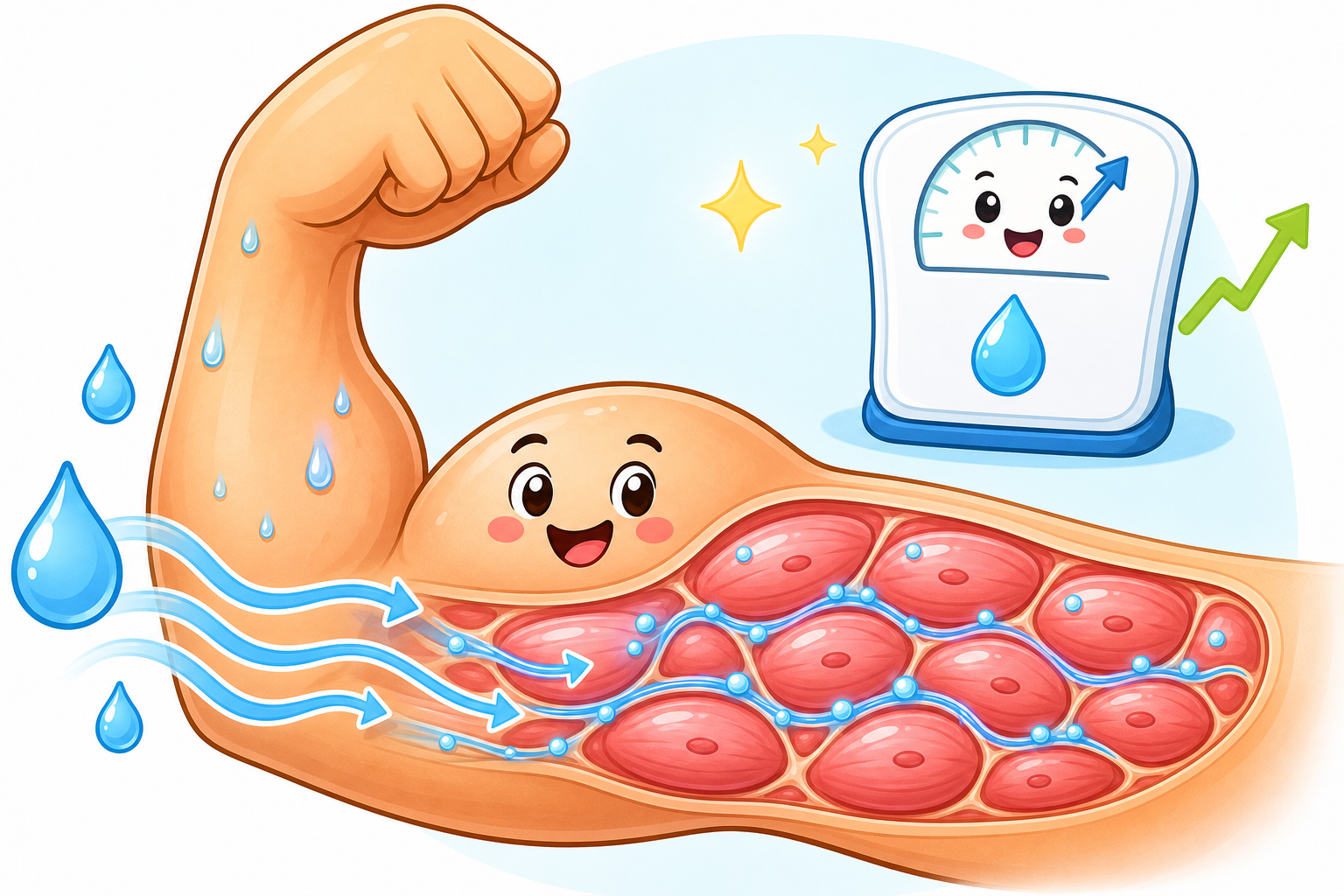
Yes, but it is not fat. Creatine draws water into your muscle cells. This cellular hydration is actually a sign that the supplement is working. During the first week of use, it is common to see the scale go up by 2 to 4 pounds. This is entirely water weight stored inside the muscle tissue.
Does it cause muscle cramps or dehydration?
No. In fact, research suggests the opposite. A 2017 position stand reviewed injury data among athletes and found that those using creatine actually experienced fewer instances of muscle cramps, dehydration, and heat illness compared to those who did not use it.
The Bottom Line / Takeaways
- What we know: Creatine monohydrate is a safe, well-researched supplement that reliably improves high-intensity exercise performance, muscle strength, and muscle growth when combined with resistance training.
- What is emerging: Evidence strongly suggests creatine offers cognitive benefits, particularly for short-term memory and reasoning, especially in older adults, vegetarians, and those experiencing mental fatigue.
- Who benefits: While athletes use it for performance, women across the lifespan and older adults fighting muscle loss stand to gain significant health benefits from daily use.
- What remains uncertain: While early animal studies show promise for creatine protecting the brain against traumatic brain injury and supporting fetal health during pregnancy, more human trials are needed to confirm these specific medical applications.
- Confidence level: The scientific confidence in the safety and physical efficacy of creatine monohydrate in healthy adults is very high.
Quick Reference: Key Studies
| Study Focus | Key Finding | Source |
|---|---|---|
| Women’s Health | Creatine metabolism fluctuates with reproductive hormones; supplementation supports strength, cellular hydration, and bone health in women across the lifespan. | PMID 40371844 |
| Muscle Strength | Creatine combined with resistance training significantly increases upper and lower body strength in adults under 50. | PMID 39519498 |
| Cognitive Function | Creatine provides small but measurable improvements in short-term memory and intelligence/reasoning, especially under stress. | PMID 29704637 |
| General Safety & Efficacy | Long-term use is safe; creatine reduces injury risk and is the most effective supplement for high-intensity exercise capacity. | PMID 28615996 |
| Supplement Timing | Post-workout ingestion may offer slight advantages over pre-workout, but daily consistency is the most important factor. | PMID 34445003 |
Last updated: July 2026
This article synthesizes findings from peer-reviewed research. It is for educational purposes only and does not constitute medical advice. Consult a healthcare provider before starting any new regimen.


Leave a Reply