
Falling is one of the most common and serious health concerns for older adults. At least one in three people over the age of 65 falls each year. These events can lead to severe injuries, hospital stays, and a lingering fear of falling that causes people to limit their daily activities.
When we think of staying active as we age, many of us picture walking, gardening, or light stretching. While these are excellent for overall health, science tells a very specific story about gravity and aging. To actually stop falls from happening, the body needs targeted challenges.
Research shows that specific forms of exercise can drastically reduce the rate of falls. However, the type of exercise matters immensely. A casual stroll around the neighborhood does not offer the same protection as a targeted balance and strength program.
This article breaks down what the latest peer-reviewed research says about balance training, which specific exercises work best, and how the body adapts to prevent falls.
Related: How to Prevent Falls in Older Adults: What Research Says
What the Research Shows About Exercise and Falls
The evidence supporting exercise for fall prevention is incredibly strong. A 2019 review in The Cochrane database of systematic reviews analyzed 108 randomized controlled trials involving over 23,000 community-dwelling older adults. The researchers found that, overall, exercise reduces the rate of falls by 23 percent.
However, when scientists looked closer at the types of exercise, they found distinct differences in effectiveness.
- Balance and functional exercises: Workouts that specifically challenge balance reduced the rate of falls by 24 percent.
- Multiple categories of exercise: Programs that combined balance training with resistance (strength) training were the most effective, reducing the rate of falls by 34 percent.
- Tai Chi: This traditional practice reduced the rate of falls by 19 percent.
- Walking and Dance: The researchers noted that they were uncertain if programs relying primarily on walking or dance actually reduced the rate of falls, as the evidence was too weak or mixed.
A more recent 2024 review in Systematic reviews confirmed these findings. After looking at over 200 trials, the researchers concluded that the most certain benefits come from supervised, long-duration balance and resistance training, as well as group Tai Chi.
How Balance Actually Works in the Body
To understand why some exercises work better than others, it helps to understand how the human body stays upright. Balance is not a single skill. It is a complex system that relies on three different physical abilities.

1. Static balance: The ability to stay steady while standing still.
2. Dynamic balance: The ability to stay steady while moving, such as walking or transitioning from sitting to standing.
3. Reactive balance: The ability to catch yourself and recover when you trip or slip.
These three types of balance rely on a biological process called proprioception (pro-pree-o-SEP-shun). This is your body’s ability to sense its position in space without you having to look at your limbs. As we age, our sensory organs and nerve pathways change, which can dull our proprioception.
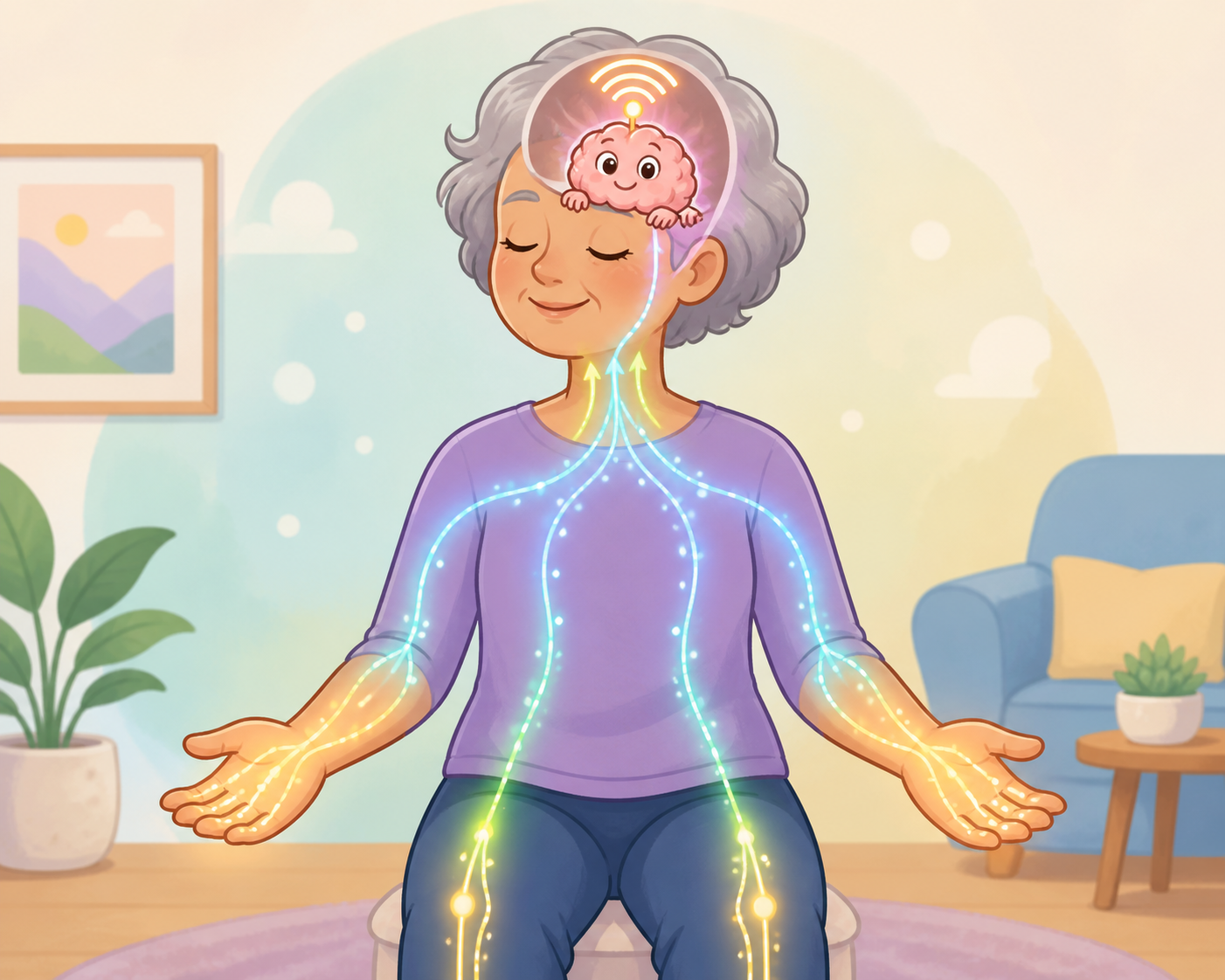
Furthermore, aging often brings sarcopenia (sar-ko-PEE-nee-uh), which is the natural age-related loss of muscle mass and strength. When we lose muscle power in our legs and core, our body cannot react fast enough to catch us when we stumble.
Related: How to Prevent Age-Related Muscle Loss: What the Latest Science Says
This is why walking is not enough to prevent falls. Walking is a highly automated, repetitive movement. It does not force the brain and muscles to practice reacting to sudden instability.
The Most Effective Types of Fall Prevention Training
Based on the current scientific literature, the following training methods have the strongest evidence for preventing falls.
Multicomponent Training (Balance + Strength)
Programs that combine balance challenges with resistance training consistently show the highest success rates. A 2025 review in Frontiers in public health compared single-component exercises to multicomponent programs. The researchers found that multicomponent training significantly improved functional parameters like gait speed, lower limb strength, and the ability to stand up from a chair.
By building strength in the legs and core, the body has the actual physical power required to execute a balance recovery, like taking a quick, forceful step forward after tripping.
The Otago Exercise Programme
The Otago Exercise Programme is a well-known, evidence-based physical therapy program designed specifically to prevent falls. It consists of muscle-strengthening and balance-retraining exercises delivered at home.
A 2022 review in Frontiers in public health analyzed 34 papers on the Otago program. The research showed that it effectively improves lower limb strength, dynamic balance, and static balance. Interestingly, the review also found that the program improves cognitive function and fall efficacy. Fall efficacy is a person’s confidence in their ability to avoid falling. Building this confidence is crucial, as a fear of falling often causes older adults to become sedentary, which only accelerates muscle loss.
Tai Chi
Tai Chi involves slow, deliberate movements that shift body weight from one leg to the other. A 2023 review in Frontiers in public health noted that interventions focusing on balance and weight-shifting are highly effective. Tai Chi forces the brain to focus on body positioning while building strength in the stabilizing muscles of the hips and ankles.
Task-Oriented Training
Task-oriented training involves practicing the exact movements that people struggle with in daily life, rather than just lifting weights on a machine. A 2026 review in Aging clinical and experimental research compared task-oriented training to conventional exercise. The researchers found that task-oriented training was superior for improving walking speed and balance confidence, making it a highly practical approach for older adults.
The New Science of “Tripping on Purpose”
One of the most interesting developments in fall prevention is perturbation (per-ter-BAY-shun) training. A perturbation is a sudden, unexpected disturbance to your balance.
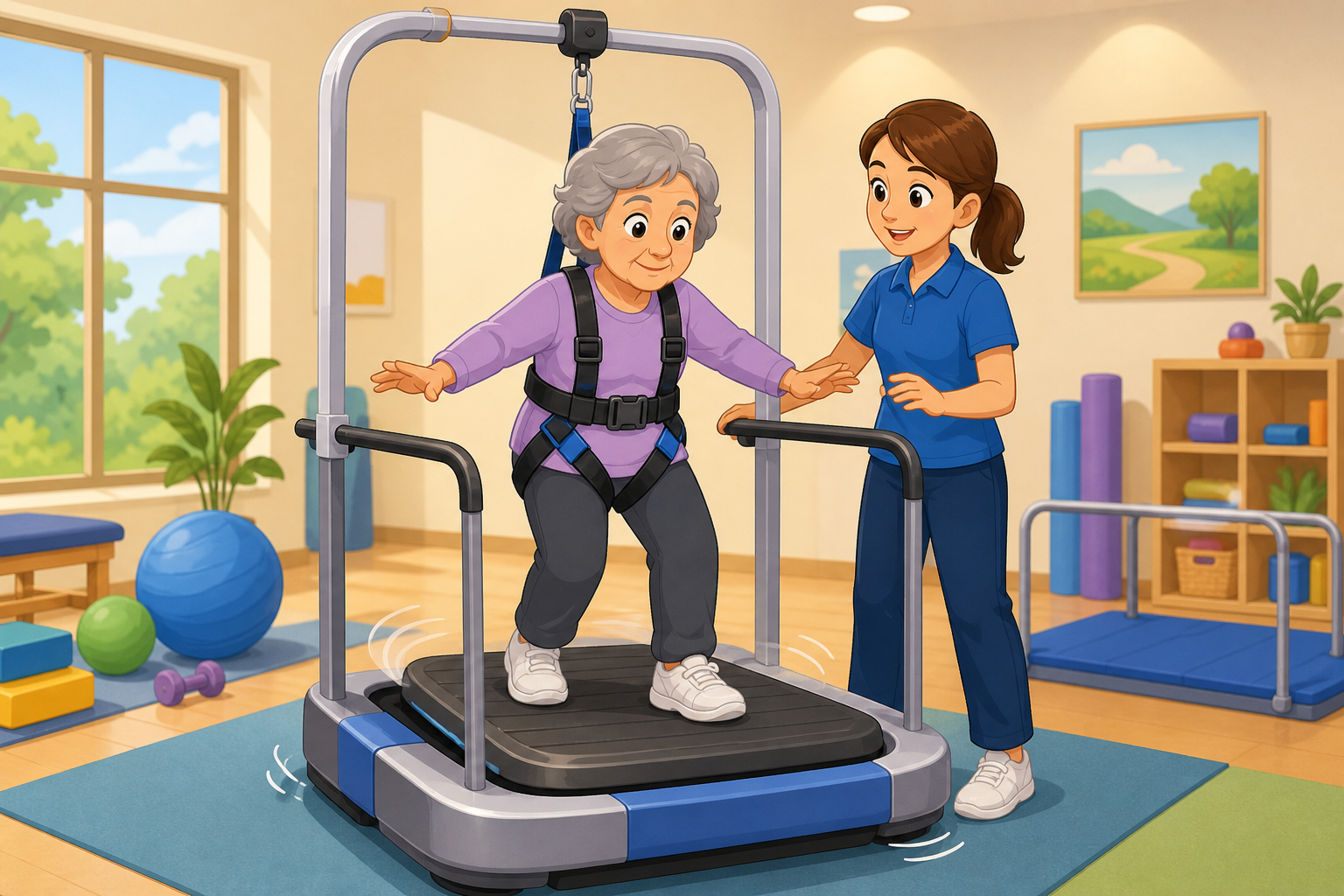
In perturbation-based balance training, a therapist intentionally throws a patient off balance in a safe, controlled environment. This might involve standing on a treadmill that suddenly jerks forward, or having a therapist gently push the patient’s hips.
A 2017 review in Geriatrics & gerontology international explains that this method trains the body’s reactive balance. Because falls are usually accidental and unexpected, practicing unexpected slips forces the nervous system to learn how to react instantly. The review found that this training significantly reduces fall incidence among healthy older adults and even helps patients with Parkinson’s disease.
If this sounds dangerous for frail individuals, research suggests otherwise. A 2023 pilot study in European geriatric medicine tested perturbation treadmill training on prefrail and frail geriatric patients, many of whom had cognitive impairments. The researchers concluded that with proper safety harnesses and therapist supervision, this highly effective training is feasible and safe even for very vulnerable populations.
What About Pilates and Dance?
Many older adults enjoy Pilates and dance classes, but do they actually prevent falls?
Pilates: A 2021 study in the International journal of environmental research and public health tested a three-month Pilates program on older women. The researchers found that Pilates significantly improved the participants’ limits of stability and their ability to balance on an unstable surface with their eyes closed. This suggests Pilates is a great tool for building core strength and static balance.
Dance: The evidence for dance is less certain. A 2024 review in Age and ageing looked at 41 studies on dance interventions (including ballroom, cultural dance, and dance exercise). While dance improved basic movement tests like standing up from a chair, the researchers concluded there is “very low certainty evidence” that dance actually reduces the number of falls people experience. It is a wonderful social and cardiovascular activity, but it should not replace dedicated strength and balance training if fall prevention is the primary goal.
Common Questions About Balance Training
Is walking enough to prevent falls?
No. While walking is excellent for heart health and endurance, scientific reviews consistently show that walking programs alone do not significantly reduce the rate of falls. Fall prevention requires exercises that challenge your center of gravity and build muscle power.
Does balance training help if I have already fallen in the past?
Yes. Research shows that exercise programs are equally effective for people who have a history of falling and those who do not. Building strength and balance can prevent a second fall and help restore the confidence needed to stay active.
How often do I need to train?
Most successful clinical trials involve exercising two to three times a week for at least 12 weeks. Consistency is required to maintain the nervous system adaptations and muscle strength needed to stay upright.
The Bottom Line
The science is clear: falls are not an inevitable part of aging. They are largely preventable through the right type of physical conditioning.
We know with high certainty that exercise programs combining balance challenges and resistance training can reduce the rate of falls by roughly a third. Programs like Tai Chi, the Otago Exercise Programme, and specialized perturbation training are highly effective because they force the brain and muscles to adapt to instability.
While activities like walking and dance are great for overall well-being, they do not offer the targeted neuromuscular challenges required to stop a fall in progress. For the best protection, older adults should seek out supervised programs that safely but consistently push them out of their physical comfort zones.
Quick Reference: Key Studies
| Study Focus | Key Finding | Source |
|---|---|---|
| Massive Exercise Review | Exercise reduces fall rates by 23%. Balance and functional training are the most effective interventions. | PMID 30703272 |
| Multicomponent vs Single | Combining strength, balance, and aerobic exercise improves physical function, though single programs like Tai Chi are also highly effective at stopping falls. | PMID 40791619 |
| Task-Oriented Training | Practicing specific daily movements improves walking speed and balance confidence more effectively than conventional training. | PMID 41566097 |
| Otago Exercise Programme | This home-based strength and balance program improves physical stability, cognitive function, and confidence in avoiding falls. | PMID 36339194 |
| Perturbation Training | Practicing “tripping” in a safe environment trains reactive balance and significantly reduces falls in daily life. | PMID 28621015 |
| Dance Interventions | Dance improves some functional mobility, but there is very low certainty that it actually prevents falls compared to standard balance training. | PMID 38776214 |
| Pilates Training | Three months of Pilates significantly improves limits of stability and balance on unstable surfaces. | PMID 33915843 |
Last updated: September 2026
This article synthesizes findings from peer-reviewed research. It is for educational purposes only and does not constitute medical advice. Consult a healthcare provider before starting any new regimen.

Leave a Reply