
It is a familiar scenario. You feel easily distracted at work, or you notice you are forgetting little things around the house. You read online that meditation is a great way to “train your brain,” so you download an app and start sitting in silence for ten minutes a day.
But what is actually happening inside your head when you meditate?
For years, meditation has been promoted as a mental workout that can improve memory, sharpen focus, and even prevent age-related mental decline. However, when scientists put these claims to the test using rigorous clinical trials and brain scans, the results tell a more nuanced story.
Meditation is broadly defined as a practice that involves paying attention to the present moment without judgment. While it is highly effective at reducing stress and helping people manage their emotions, its ability to dramatically boost memory or intelligence is often overstated.
Let us explore what peer-reviewed research actually shows about how meditation affects your cognition, your emotions, and your brain structure.
The Reality Check on Meditation and Memory
When researchers study cognition, they are looking at processes like memory, learning, and executive function (eg-ZEK-yoo-tiv FUNK-shun), which is the brain’s management system for planning, focusing, and juggling tasks.

If meditation is a workout for the brain, we would expect long-term practice to result in better memory and sharper executive function. However, large-scale studies on older adults have found surprising results.
A major 2023 clinical trial in JAMA Network Open studied 135 cognitively healthy older adults over 18 months. The participants were divided into groups that either practiced meditation, learned a non-native language, or did nothing new. The researchers found no evidence that meditation significantly improved global cognition, episodic memory, or executive function.
Similarly, a 2022 study in JAMA looked at 585 older adults who had subjective concerns about their memory. After six months of mindfulness training, exercise, or a combination of both, the researchers found no significant improvements in memory or executive function scores compared to a control group.
Does this mean meditation does nothing for focus? Not exactly. The age of the participants and the length of the practice seem to matter.
For example, a 2019 study in Behavioural Brain Research tested younger adults (ages 18 to 45) who had never meditated before. They were assigned to either listen to a podcast or practice a guided meditation for 13 minutes a day. After eight weeks, the meditation group showed enhanced attention, better working memory, and improved recognition memory. Interestingly, testing them at the four-week mark showed no benefits, suggesting that consistency over time is required to see even mild cognitive improvements.
In children and adolescents, the evidence is also mixed. A 2022 systematic review in Neuroscience and Biobehavioral Reviews found that while meditation showed some potential to improve sustained attention in kids, there was very weak evidence that these benefits transferred to other areas like academic achievement or overall behavior.
Related: Can We Prevent Age-Related Cognitive Decline? What Science Actually Shows
The Real Strength: Emotion and Stress Regulation
If meditation is not a magic cure for memory loss, why do so many people feel better when they do it? The answer lies in how meditation changes our relationship with stress and physical sensations.
While cognitive gains might be modest, the psychological benefits of meditation are well-documented. A 2011 review in Clinical Psychology Review concluded that mindfulness brings about increased subjective well-being, reduced psychological symptoms, and improved emotional regulation.
Calming the Nervous System
Meditation actively trains the brain to handle stress differently. In a 2013 randomized controlled trial in The Journal of Clinical Psychiatry, researchers studied 93 individuals diagnosed with Generalized Anxiety Disorder. Half completed an eight-week mindfulness program, while the other half took a stress management education class.
To test their stress reactivity, researchers put the participants through a laboratory stress test that involved public speaking and mental math. The group that practiced mindfulness showed significantly greater reductions in anxiety and distress during the high-stress task compared to the education group.
Improving Body Awareness
Meditation also improves interoception (in-ter-oh-SEP-shun), which is your brain’s ability to sense and understand internal body signals, like a racing heart or a tense stomach.
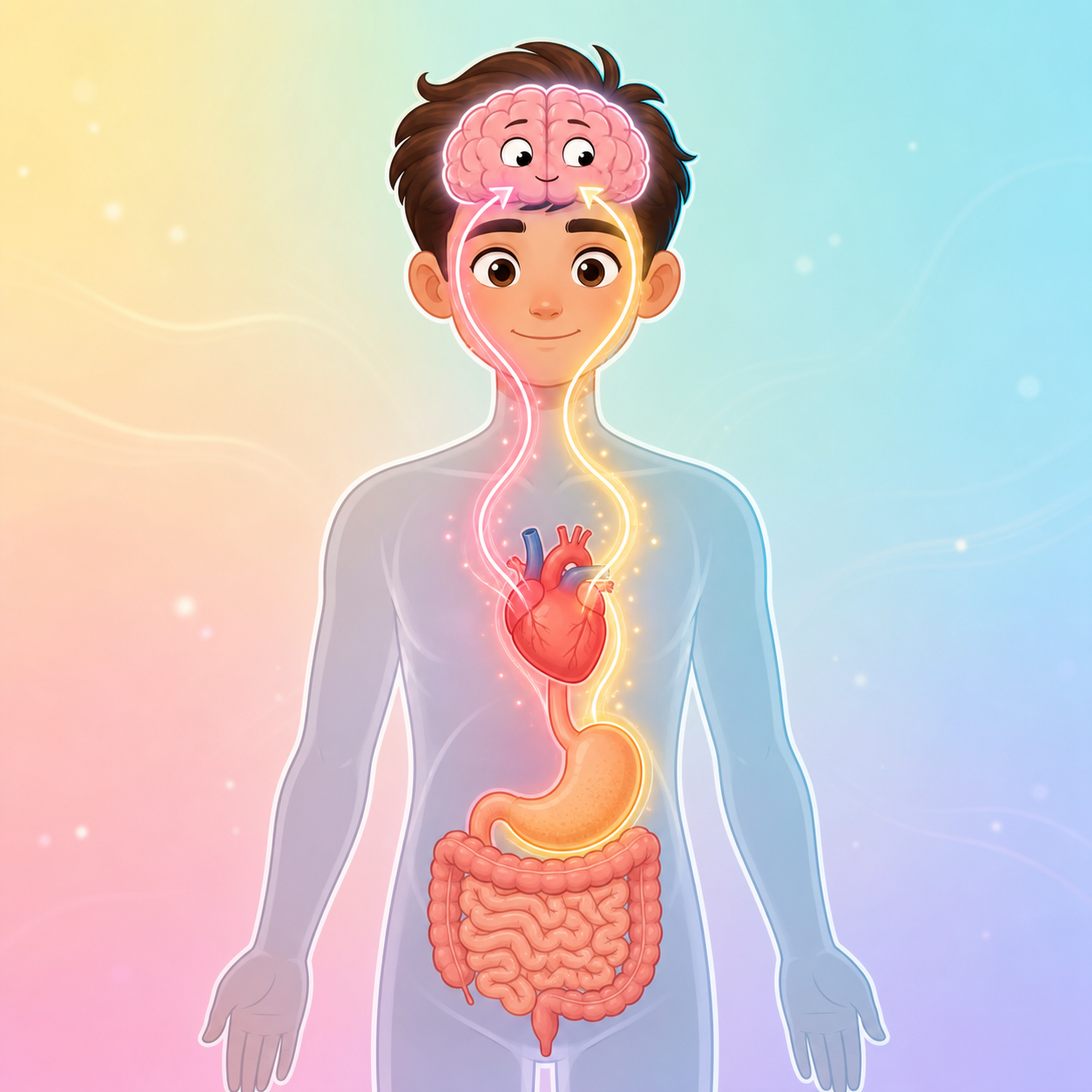
A 2025 meta-analysis in Scientific Reports analyzed 29 trials involving over 2,000 participants. The researchers found that mindfulness training consistently improved self-reported interoception. By becoming more aware of their physical sensations, participants were better able to recognize when they were becoming stressed, allowing them to calm down before their anxiety spiraled out of control.
How This Might Work: The Monitor and Acceptance Theory
To understand why meditation helps with stress but has mixed results for memory, scientists have proposed the Monitor and Acceptance Theory. Outlined in a 2017 review in Clinical Psychology Review, this theory suggests that mindfulness training works by teaching two distinct skills: attention monitoring and acceptance.

1. Attention Monitoring: This is the act of noticing what is happening in the present moment. You train your brain’s “flashlight” to focus on your breath or your thoughts.
2. Acceptance: This is the act of observing those thoughts without judging them or trying to push them away. It acts like a shock absorber for your emotions.
The theory explains that if you only learn to monitor your thoughts without learning to accept them, meditation can actually increase anxiety. You become hyper-aware of your racing heart or negative thoughts, which causes distress. However, when monitoring is paired with acceptance, you can notice a negative emotion, accept that it is there, and let it pass without reacting to it. This combination is what ultimately reduces stress and improves mood.
Related: How the Relaxation Response Actually Affects Your Brain and Body
Does Meditation Change Brain Structure?
If meditation changes how we process stress, does it physically alter the brain?
Magnetic resonance imaging (MRI) studies suggest that it might. A 2014 meta-analysis in Neuroscience and Biobehavioral Reviews examined brain scans from roughly 300 meditation practitioners. The researchers found consistent structural differences in eight brain regions among meditators compared to non-meditators.
Key areas included:
- The Hippocampus: An area vital for memory consolidation and emotional regulation.
- The Insula: A region heavily involved in interoception and body awareness.
- The Anterior Cingulate Cortex: An area linked to self-control and regulating emotions.
While these findings are notable, there is a catch. Many of these studies are cross-sectional, meaning they looked at the brains of people who had already been meditating for years. It is difficult to prove whether meditation caused these brain regions to grow, or if people who naturally have larger insulas and hippocampi are simply more drawn to meditation.
Scientists are actively exploring ways to prove cause and effect. A 2024 review in Neuroscience and Biobehavioral Reviews highlighted how researchers are using non-invasive brain stimulation to target frontal and parietal cortices. By temporarily altering brain activity, scientists hope to pinpoint the exact neural mechanisms that make meditation effective.
Physical Health and the Immune System
The benefits of emotional regulation may extend to physical health. Chronic stress is known to increase inflammation and weaken the immune system. Because meditation lowers stress, researchers have investigated whether it can boost immunity.
A 2016 systematic review in Annals of the New York Academy of Sciences looked at 20 randomized controlled trials examining meditation and immune function. The researchers found tentative evidence that meditation is associated with reduced markers of inflammation (such as C-reactive protein) and decreased activity of NF-kB, a protein complex that triggers inflammation in response to stress.
While the authors cautioned that more research is needed, these findings support the idea that calming the mind can create a healthier environment for the body’s immune cells.
Common Questions About Meditation and Brain Health
How long do I need to meditate to see benefits?
Research suggests consistency matters more than duration. Studies show that brief sessions of 13 to 20 minutes a day can reduce anxiety and improve mood, but these benefits usually take several weeks (typically four to eight weeks) to become noticeable.
Will meditation prevent dementia or Alzheimer’s disease?
Currently, there is no strong scientific evidence that meditation prevents dementia or age-related cognitive decline. While it promotes general well-being and stress reduction, it should not be viewed as a standalone treatment for memory loss.
Can meditation ever make you feel worse?
Yes, for some people. A 2022 single-case experimental study found that practicing mantra meditation alone occasionally increased negative daily affect in some participants. However, when meditation was combined with physical yoga or ethical education, participants experienced better emotional regulation and distress tolerance. If sitting in silence causes you severe anxiety, movement-based practices like yoga or walking meditation may be better alternatives.
Related: What Science Actually Says About Meditation and Mindfulness
The Bottom Line / Takeaways
Based on decades of clinical trials, brain imaging, and psychological evaluations, here is what we currently know about meditation:
- What we know: Meditation is a highly effective tool for reducing anxiety, managing stress, and improving emotional regulation. It helps you become more aware of your body’s physical signals and teaches you how to observe negative thoughts without reacting to them.
- What remains uncertain: It is still unclear if meditation directly causes long-term structural changes in the brain, as many studies rely on comparing experienced meditators to non-meditators rather than tracking individuals over decades.
- What the evidence does not support: Meditation is not a highly effective intervention for improving memory, preventing cognitive decline, or dramatically boosting executive function, particularly in older adults.
If you want to start a meditation practice to feel more grounded, less reactive to stress, and more in tune with your body, the science heavily supports your decision. But if you are meditating solely to improve your memory, you may want to temper your expectations.
Quick Reference: Key Studies
| Study Focus | Key Finding | Source |
|---|---|---|
| Meditation and Older Adult Cognition | 18 months of meditation did not significantly improve global cognition, episodic memory, or executive function in healthy older adults. | PMID 37450303 |
| Brief Daily Meditation in Novices | 8 weeks of 13-minute daily meditation decreased negative mood and modestly improved attention and working memory in younger adults. | PMID 30153464 |
| Meditation and Generalized Anxiety | An 8-week mindfulness program significantly reduced anxiety symptoms and stress reactivity during a laboratory stress test. | PMID 23541163 |
| Brain Structure Changes | Meta-analysis found consistent structural differences in the brains of meditators, particularly in the hippocampus, insula, and anterior cingulate cortex. | PMID 24705269 |
| Mindfulness and Body Awareness | Mindfulness training showed a positive effect on self-reported interoception (the ability to sense internal body signals). | PMID 41198766 |
| Meditation and the Immune System | Tentative evidence suggests meditation may reduce systemic inflammation markers like C-reactive protein and NF-kB activity. | PMID 26799456 |
Last updated: September 2026
This article synthesizes findings from peer-reviewed research. It is for educational purposes only and does not constitute medical advice. Consult a healthcare provider before starting any new regimen.



Leave a Reply