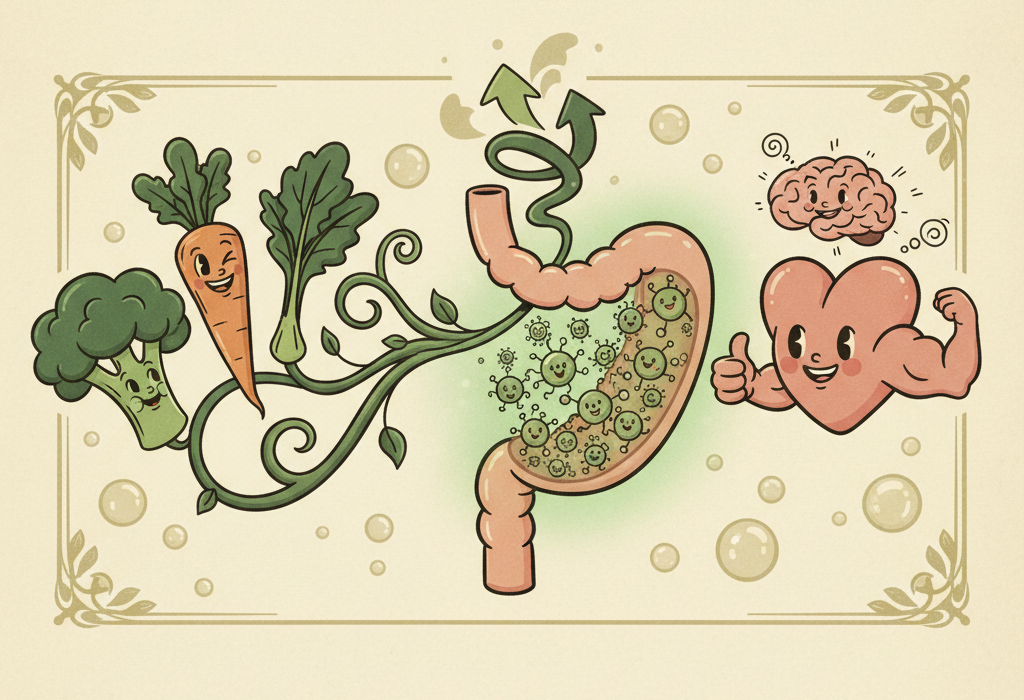
Your digestive tract is like a bustling microscopic city. The food you eat dictates exactly which residents move in, thrive, or pack up and leave. When you change your diet, you change the population of this city.
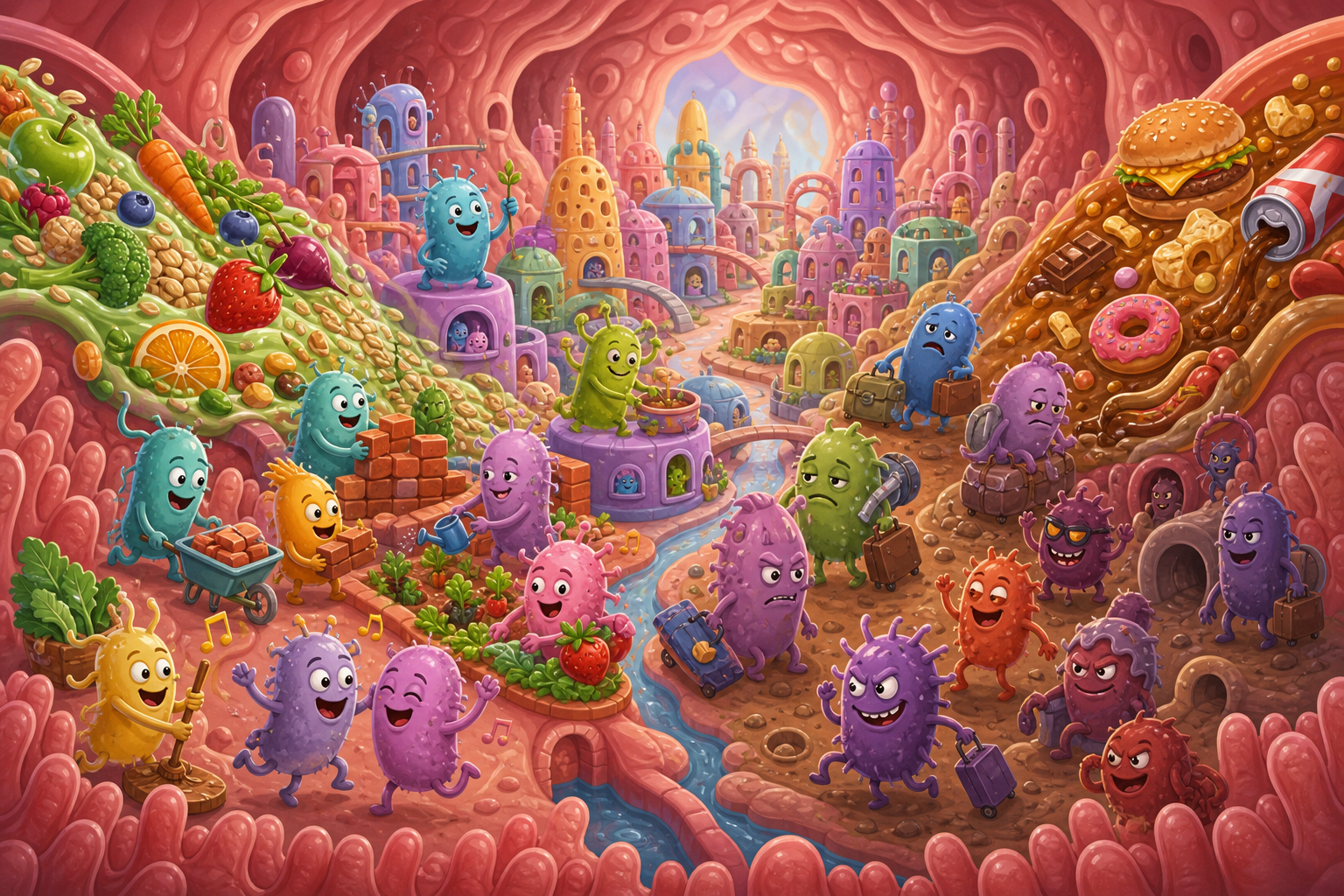
So, what happens when you feed that city a plant-based diet?
In short, a plant-based diet improves gut health by providing fiber that feeds beneficial bacteria. These bacteria then produce compounds that lower inflammation, strengthen the gut lining, and regulate your immune system.
However, switching from a typical highly processed diet to one rich in plants is not just about eating more salads. The transition alters your body chemistry in highly specific ways. Scientists have spent years mapping exactly how plant foods interact with the trillions of microbes in your gut.
This article breaks down what the latest peer-reviewed research actually shows about plant-based diets, how they change your gut bacteria, and what that means for your overall health.
What the Research Shows
When researchers study diets, they usually compare a standard Western diet (high in processed meats, refined sugars, and low in fiber) to plant-based diets like the Mediterranean diet, vegetarian, or vegan diets.
The evidence consistently shows that eating more plants shifts the gut community away from bacteria associated with disease and toward bacteria associated with health.
Increasing Beneficial Bacteria
Your microbiome (my-kroh-BY-ohm), the collection of all microbes living in your gut, responds quickly to what you eat.
A 2021 study in Nutrients compared the gut bacteria of vegans to those of omnivores. The researchers found that people eating a vegan diet had significantly higher levels of a bacterial group called Bacteroidetes, and specifically a genus known as Prevotella. These bacteria are experts at breaking down plant fibers.
Similarly, a 2021 review in Nutrients highlighted that diets rich in plant components like fiber and polyphenols (natural plant compounds) increase the abundance of Bifidobacterium. This specific type of bacteria is highly beneficial because it helps maintain the protective lining of your intestines.
Lowering Systemic Inflammation
One of the most significant findings in gut health research is how diet affects inflammation.
A standard Western diet is linked to an increase in lipopolysaccharides (lip-oh-pol-ee-sak-uh-rides), often abbreviated as LPS. LPS are essentially toxins found on the outer walls of certain bacteria. When you eat a diet high in saturated animal fats and low in fiber, these toxins can leak through your gut lining and enter your bloodstream. This triggers a low-grade alarm in your immune system, leading to chronic inflammation.

Research shows that plant-based diets actively reduce this process. According to a 2021 review in Nutrients, diets rich in plants promote a state of “eubiosis” (a healthy, balanced gut). This balanced state reduces the amount of LPS leaking into the blood, which turns down the volume on systemic inflammation.
Protecting the Aging Body
As we age, our bodies naturally experience a slow increase in inflammation and a decline in bodily functions, a process often tied to frailty.
A major 2020 study in Gut looked at 612 older adults across five European countries. Half of the participants were asked to follow a Mediterranean diet tailored for older adults, which is heavily plant-based. After one year, those who stuck to the diet saw specific, positive changes in their gut microbiome.
These microbiome changes were directly linked to reduced frailty, improved memory, and lower levels of inflammatory markers like C-reactive protein. The researchers noted that the bacteria promoted by the plant-based diet acted as “keystone species,” meaning they played a crucial role in holding the entire healthy gut community together.
How This Might Work
To understand why plants are so effective at changing our health, we have to look at the biological mechanisms happening inside the colon.
The Magic of Dietary Fiber
Human bodies cannot digest dietary fiber. When you eat broccoli, beans, or oats, the fiber travels through your stomach and small intestine entirely intact. It only breaks down when it reaches the large intestine, where your gut bacteria live.
Your gut bacteria eat this fiber. Through a process called fermentation, they digest the fiber and spit out waste products. Fortunately for us, their waste products are incredibly healthy.
The most important of these byproducts are short-chain fatty acids (short-chayn fat-ee as-ids), or SCFAs.
Why SCFAs Matter
A 2020 review in Nutrients explains that SCFAs, particularly one called butyrate, act as the primary fuel source for the cells lining your colon.
Imagine your gut lining as a brick wall that keeps harmful bacteria and toxins out of your bloodstream. SCFAs provide the mortar that keeps those bricks tightly sealed. When you do not eat enough fiber, your bacteria starve, SCFA production drops, and the brick wall becomes leaky.

By eating a plant-based diet, you provide a constant supply of fiber. This keeps SCFA production high, which maintains a strong gut barrier, regulates your appetite, and even sends signals to your brain to help regulate your metabolism.
Related: How an Anti-Inflammatory Diet Actually Affects Your Body
The Role of Polyphenols
Fiber is not the only beneficial part of plants. Plants also contain polyphenols, which are compounds that give fruits and vegetables their bright colors.
Most polyphenols are not absorbed in the small intestine. Instead, they travel to the colon, where they act similarly to fiber. Gut bacteria feed on these polyphenols, which encourages the growth of beneficial bacteria while actively suppressing harmful, disease-causing bacteria.
Diet Comparison: Western vs. Plant-Based
To see how dietary patterns directly impact the gut, consider this summary of how a typical Western diet compares to a plant-based or Mediterranean diet.
| Measurement | Western Diet | Plant-Based / Mediterranean Diet |
|---|---|---|
| Fiber Intake | Very low | High |
| Dominant Bacteria | Firmicutes (often linked to obesity) | Bacteroidetes, Prevotella |
| SCFA Production | Low | High |
| Gut Barrier | Weaker (prone to leaking LPS toxins) | Strong and well-sealed |
| Inflammation | Higher systemic inflammation | Lower systemic inflammation |
Who Benefits Or Needs Caution
While eating more plants is generally recommended for public health, the research highlights specific groups who might benefit the most, as well as those who should be careful.
Who Benefits Most
- People at risk for Inflammatory Bowel Disease (IBD): A 2024 umbrella review in Advances in Nutrition found that diets high in fruits, vegetables, and fiber are strongly associated with a reduced risk of developing Crohn’s disease and ulcerative colitis.
- Older Adults: As shown in the NU-AGE study, older adults who adopt a Mediterranean or plant-based diet can slow down the loss of beneficial gut bacteria, which helps protect against physical frailty and cognitive decline.
- People with Skin Conditions: A 2024 review in Nutrients notes the strong connection between the gut and the skin. Plant-based diets can reduce the systemic inflammation that often triggers acne, alopecia, and atopic dermatitis (eczema).
Related: What Science Actually Says About the Health Benefits of Probiotics
Who Should Be Careful
- People with Active Digestive Flares: While fiber prevents IBD, people who are actively experiencing an IBD flare-up or severe Irritable Bowel Syndrome (IBS) may need to temporarily limit certain plant fibers. Specifically, fermentable carbohydrates (FODMAPs) found in beans, onions, and certain fruits can cause severe bloating and pain in sensitive individuals.
- Strict Vegans (Regarding Bone Health): A plant-based diet must be well-planned. A 2024 review in Current Osteoporosis Reports noted that strict vegan diets have sometimes been associated with a higher risk of bone fractures. This is usually due to inadequate intake of calcium, vitamin D, and high-quality protein. People eating 100% plant-based diets must ensure they get these nutrients through fortified foods or supplements.
Common Questions About Plant-Based Diets and Gut Health
Do I have to become 100% vegan to get these gut health benefits?
No. Research shows that the Mediterranean diet, which includes moderate amounts of fish, poultry, and dairy, provides excellent gut health benefits. The key is that the majority of the diet is made up of plants, rather than the complete elimination of all animal products.
Will eating more plants cause bloating and gas?
Yes, often at first. If your current diet is low in fiber, your gut microbiome is not equipped with the right bacteria to break down a sudden influx of beans and broccoli. If you rapidly increase your plant intake, you will likely experience gas and bloating. It is best to increase fiber slowly over several weeks and drink plenty of water to let your gut city adapt.
Are all plant-based foods good for the gut?
No. A diet made entirely of potato chips, refined white bread, and sugary sodas is technically “plant-based,” but it will not help your gut. The benefits come from minimally processed, whole plant foods that still contain their natural fiber and polyphenols.
Related: How Your Gut Microbiome Actually Affects Brain Health
The Bottom Line / Takeaways
The scientific consensus is clear. The food you eat directly shapes the bacteria living in your digestive tract.
We know with high confidence that diets rich in whole plants (like the Mediterranean diet or a well-planned vegetarian diet) increase the abundance of beneficial bacteria. These bacteria ferment plant fibers into short-chain fatty acids, which repair the gut lining, lower systemic inflammation, and protect against chronic diseases associated with aging.
We also know that diets high in processed foods and low in fiber starve these beneficial bacteria, leading to a weaker gut barrier and higher inflammation.
While the exact ideal ratio of plants to animal products may vary from person to person, the evidence overwhelmingly supports making fiber-rich, whole plant foods the foundation of your daily meals.
Quick Reference: Key Studies
| Study Focus | Key Finding | Source |
|---|---|---|
| Aging and Frailty | A 1-year Mediterranean diet intervention altered the gut microbiome, reducing frailty and improving brain function in older adults. | PMID 32066625 |
| Gut Composition | Vegan diets are associated with a higher abundance of fiber-degrading bacteria like Prevotella and Bacteroidetes. | PMID 34371912 |
| Bowel Disease | High intakes of fruits, vegetables, and fiber are strongly associated with a reduced risk of developing Crohn’s disease and ulcerative colitis. | PMID 38599319 |
| Dietary Fiber | Fiber ferments into short-chain fatty acids, which regulate appetite, improve insulin sensitivity, and reduce chronic inflammation. | PMID 33096647 |
| Inflammation | Western diets increase gut leakiness and endotoxins (LPS), while plant-rich diets promote a balanced gut and lower inflammation. | PMID 34444955 |
Last updated: October 2026
This article synthesizes findings from peer-reviewed research. It is for educational purposes only and does not constitute medical advice. Consult a healthcare provider before starting any new regimen.


Leave a Reply