
When scientists want to know if a new medication works, they compare it to a sugar pill. But how do you test the health benefits of fish oil? For decades, researchers have used olive oil as the “dummy pill” or placebo.
However, a growing body of scientific evidence reveals a major flaw in this approach: olive oil is highly active in the human body. It is not a neutral placebo. Today, researchers are discovering that olive oil and fish oil are not just competitors in clinical trials. They are two distinct tools that change our body chemistry in unique ways.
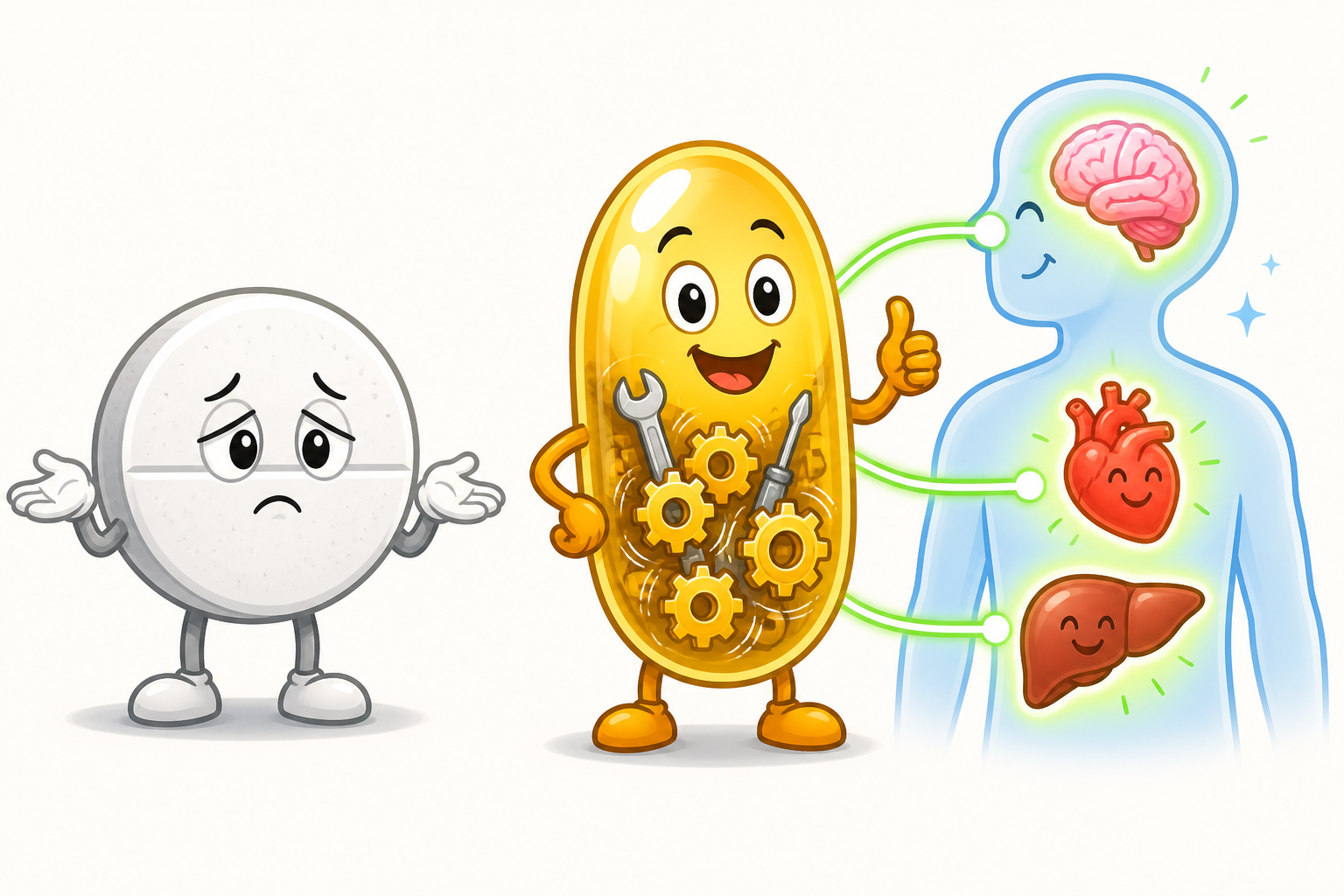
Whether you are looking to support a healthy pregnancy, protect your heart, or understand how hospitals use intravenous nutrition, the science of these two oils offers fascinating insights.
Understanding the Fats: A Quick Primer
Before diving into the research, it helps to understand what makes these oils different at a molecular level.

- Polyunsaturated fatty acids (pol-ee-un-SATCH-uh-ray-tid) – These are fats with multiple double bonds in their chemical structure. Fish oil is famous for containing omega-3 polyunsaturated fats, specifically EPA (eye-koh-suh-pen-tuh-NO-ik AS-id) and DHA (doh-koh-suh-hex-uh-NO-ik AS-id). These are primarily known for their ability to fight inflammation.
- Monounsaturated fatty acids (mon-oh-un-SATCH-uh-ray-tid) – These fats have a single double bond. Olive oil is incredibly rich in a monounsaturated fat called oleic acid.
Both types of fat are essential for building cell membranes, producing hormones, and regulating the immune system. But as studies show, they do not behave the same way once they enter our bloodstream.
Pregnancy and Childhood Development
One of the most intensely researched areas regarding these oils is how they affect fetal development and early childhood.
Asthma and Immune System Protection
Fish oil has shown remarkable benefits for respiratory health in children. A major 2016 study in The New England Journal of Medicine followed 736 pregnant women who were given either fish oil or an olive oil placebo during their third trimester.
The results were striking. Children born to mothers who took fish oil had a 30.7% lower relative risk of developing persistent wheeze or asthma in their first three to five years of life. They also experienced fewer lower respiratory tract infections. The benefit was most pronounced in women who started the study with the lowest blood levels of EPA and DHA.
Changing How Genes Behave
How do these oils influence a developing baby? The answer lies in the placenta.
A 2019 study in the International Journal of Molecular Sciences looked at how maternal diet changes the epigenetics of the placenta. Epigenetics is the process by which environmental factors turn certain genes “on” or “off” without changing the underlying DNA sequence.
Researchers found that mothers who regularly consumed olive oil had increased activity in specific genes (like FOXP3) that regulate the immune system and promote tolerance. On the other hand, mothers who consumed fish frequently showed different genetic activations related to innate immunity. This suggests that both olive oil and fish oil actively tune the fetal immune system, just through different genetic pathways.
Brain Development and Behavior
While fish oil is often praised for brain health, the research on early supplementation is surprisingly mixed. A 2011 study in Lipids followed children whose mothers took either fish oil or olive oil during the first four months of breastfeeding.
When the children were tested at age seven, researchers found no significant differences in working memory or inhibitory control between the two groups. However, they noted that boys whose mothers took the olive oil supplement actually scored higher on “prosocial behavior” tests compared to the boys whose mothers took fish oil. The researchers noted that early, high-dose fish oil supplementation might have complex effects on development that we do not fully understand yet.
Heart Health and The Placebo Debate
For years, doctors have debated whether fish oil supplements protect the heart, particularly regarding irregular heartbeats like atrial fibrillation (AFib).
In a 2017 trial published in the International Journal of Surgery, researchers gave patients either fish oil or olive oil before undergoing coronary artery bypass graft (CABG) surgery. The fish oil group experienced a slightly lower rate of post-surgery AFib (8.4% versus 14.1% in the olive oil group), though the difference was on the borderline of statistical significance. However, the fish oil group did spend significantly less time in the intensive care unit.
This brings up the “placebo problem” actively debated in medical journals. In 2013 letters published in JAMA, scientists pointed out that olive oil contains active anti-inflammatory compounds, including oleic acid and oleocanthal.
When a clinical trial compares fish oil to olive oil and finds “no difference,” it might not mean that fish oil failed. It could mean that both oils provided cardiovascular protection. As noted in a reply by Harvard researchers, the dose of olive oil used in placebo capsules is usually quite small (1 to 2 grams), but the debate highlights how difficult it is to test dietary fats against a truly neutral baseline. Related: What Science Actually Says About Omega-3 Fatty Acid Benefits
Medical Nutrition: The Power of Blending Oils
Perhaps the most fascinating application of olive and fish oil science happens in hospitals. When patients cannot eat food normally, they receive intravenous (IV) nutrition. The fat portion of this nutrition is called a lipid emulsion.
Historically, hospitals used IV bags made entirely of soybean oil. While effective for providing calories, high doses of soybean oil can cause liver stress and inflammation. Today, medical science has moved toward blending oils to mimic a balanced diet.

The SMOF Innovation
A modern IV lipid formulation called SMOF combines four fats:
1. Soybean oil (for essential fatty acids)
2. Medium-chain triglycerides (MCTs, for quick energy)
3. Olive oil (for stable, heart-healthy monounsaturated fats)
4. Fish oil (for anti-inflammatory omega-3s)
Multiple studies show that this blend is vastly superior to older formulas.
- A 2010 study in the Journal of Pediatric Gastroenterology and Nutrition found that premature infants given SMOF had better vitamin E levels and lower liver stress enzymes compared to those given soy oil.
- Similarly, a 2010 study on children receiving home IV nutrition showed that the SMOF blend decreased bilirubin (a marker of liver stress) while the older soy formula caused it to rise.
- In adults recovering from major surgery, a 2009 study in the European Journal of Anaesthesiology found that the SMOF blend protected liver cells better than a blend made of just olive and soy oils.
These studies prove that olive oil and fish oil do not have to compete. When combined, the stability of olive oil and the anti-inflammatory power of fish oil work together to protect vulnerable organs. Related: How Your Gut Microbiome and Oxidative Stress Control Your Health
Kidney and Liver Protection
Beyond hospital nutrition, researchers have explored how these oils protect specific organs from damage.
Liver Detoxification: A fascinating 1991 study on mice looked at acetaminophen (Tylenol) toxicity. Mice fed a fish oil diet suffered significantly less liver damage from high doses of the drug compared to mice fed an olive oil diet. The fish oil appeared to change the membranes of liver cells, allowing the liver to clear the toxic byproducts more efficiently.
Kidney Disease: However, fish oil is not a magic bullet for all organ damage. A 1996 study in Diabetes Care tested whether fish oil could slow down kidney damage in patients with Type 1 diabetes. Comparing high-dose fish oil to olive oil over a year, researchers found no significant differences in kidney function, albuminuria (protein in the urine), or blood pressure.
Practical Guidance: Tolerability and Taste
If you are considering adding these oils to your diet, you might wonder about the practical side, specifically taste and side effects.
A 2011 study in the Asia Pacific Journal of Clinical Nutrition tested the acceptability of liquid fish oil versus olive oil in older adults. Surprisingly, they found that taste was not a major deterrent. While pure fish oil was rated slightly less pleasant than olive oil, the vast majority of older adults tolerated it well without significant side effects.
However, high doses can be tough on the stomach. A 2022 feasibility trial attempted to use high-dose fish oil (over 4 grams a day) to help pregnant women quit smoking. While the gastrointestinal side effects (like burping and heartburn) were statistically similar between the fish oil and olive oil groups, the study saw a high dropout rate, suggesting that taking large amounts of any concentrated oil can be difficult to maintain daily.
Common Questions About Olive Oil and Fish Oil
Can I take fish oil and olive oil together?
Yes. In fact, medical science actively combines them in hospital settings. Olive oil provides stable monounsaturated fats and antioxidants, while fish oil provides anti-inflammatory omega-3s. They complement each other well.
Is olive oil a good substitute for fish oil?
No. They provide completely different types of fats. Olive oil is an excellent source of oleic acid, which supports general metabolic health. Fish oil is a direct source of EPA and DHA, which are specific building blocks for the brain and immune system.
Why do scientists still use olive oil as a placebo?
Historically, researchers believed olive oil had no active effect on the specific inflammatory pathways they were testing. While we now know olive oil has its own health benefits, it is still used because it safely mimics the texture and calorie content of fish oil in blinded clinical trials.
The Bottom Line
Both olive oil and fish oil offer profound, evidence-based health benefits, but they are not interchangeable.
- Fish oil shines in its ability to reduce inflammation, lower the risk of childhood asthma, and potentially reduce the length of hospital stays after major surgery.
- Olive oil acts as a powerful baseline protector, offering stable fats that support liver health, cardiovascular function, and healthy genetic expression during pregnancy.
- Together, as seen in modern medical nutrition, they provide a balanced fat profile that protects the body from oxidative stress better than either oil alone.
While science often pits them against one another in clinical trials, the reality is that a healthy diet benefits immensely from the inclusion of both.
Quick Reference: Key Studies
| Study Focus | Key Finding | Source |
|---|---|---|
| Asthma Prevention | Fish oil in pregnancy reduced persistent wheeze/asthma in offspring by ~30% compared to olive oil. | PMID 28029926 |
| Placental Genetics | Maternal olive oil and fish oil consumption both actively modify genes related to immune regulation in the placenta. | PMID 30823645 |
| Heart Surgery | Fish oil supplementation before CABG surgery significantly reduced ICU and hospital length of stay compared to olive oil. | PMID 28419884 |
| Infant Cognition | Fish oil during lactation showed no cognitive advantage at age 7 and was associated with lower prosocial scores in boys compared to olive oil. | PMID 21512889 |
| IV Nutrition (Children) | A blend of soy, MCT, olive, and fish oil (SMOF) decreased liver stress markers in children on home parenteral nutrition. | PMID 20852176 |
| IV Nutrition (Adults) | The SMOF lipid blend protected hepatocellular integrity better than an olive/soy blend in post-surgery adults. | PMID 19916246 |
| Diabetic Kidney Disease | Fish oil did not slow kidney decline or improve blood pressure better than olive oil in patients with diabetic nephropathy. | PMID 8908382 |
| Liver Toxicity | A fish oil diet protected mice against acetaminophen-induced liver necrosis better than an olive oil diet. | PMID 1999325 |
Last updated: October 2026
This article synthesizes findings from peer-reviewed research. It is for educational purposes only and does not constitute medical advice. Consult a healthcare provider before starting any new regimen.



Leave a Reply