
When a young child develops a persistent wheeze or a chronic cough, parents and doctors naturally want to know the cause. Often, the first question is whether the child has asthma and if allergies are triggering it. To find out, doctors frequently use a blood or skin test to measure a specific type of antibody in the body.
This antibody is called Immunoglobulin E (ih-MYOO-noh-GLOB-yoo-lin E), or simply IgE. It is a key player in the body’s allergic response. By testing for IgE, doctors aim to understand if a child’s respiratory symptoms are driven by allergies, which can help guide treatment decisions.
However, interpreting these tests is not as simple as looking for a positive or negative result. Recent scientific research has revealed that childhood asthma is a highly complex condition. Having high IgE levels does not guarantee a child has allergic asthma, and having low IgE levels does not mean a child is asthma-free.
This article explores what the latest peer-reviewed research actually says about IgE testing for childhood asthma, how doctors use these tests to guide treatment, and what parents need to understand about the results.
Related: Why Do Some Children Develop Allergies and Asthma? What the Latest Science Shows
How This Might Work: The Allergy Alarm System
To understand IgE testing, it helps to understand how the immune system responds to harmless substances like pollen, dust mites, or pet dander.
Think of the immune system as a home security system. Its job is to detect dangerous intruders like viruses and bacteria. In a child with allergies, the security system is overly sensitive. It builds special sensors called IgE antibodies to look for specific, harmless intruders, known as allergens.

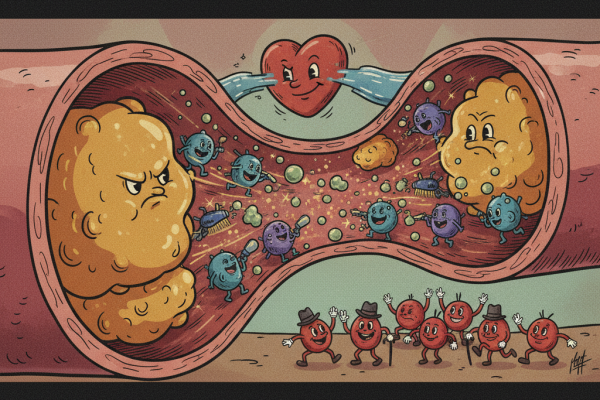
If a child is allergic to cats, their body creates cat-specific IgE antibodies. When the child breathes in cat dander, these IgE “sensors” detect the dander and sound the alarm. This alarm causes immune cells to release chemicals like histamine. These chemicals create inflammation, leading to swelling, mucus production, and muscle tightening in the airways. This cascade of events results in the classic symptoms of an asthma attack: wheezing, coughing, and shortness of breath.
When doctors test for IgE, they are checking to see if these specific sensors exist in the child’s blood or skin.
What the Research Shows About IgE Testing
Scientists have studied IgE for decades to understand its role in childhood asthma. The research shows that IgE testing is a highly useful tool, but it must be interpreted carefully alongside a child’s medical history.
Identifying the Right Asthma Type
Asthma is not a single disease. It is an umbrella term for several different types of airway inflammation. Scientists call these distinct subtypes endotypes (EN-doh-types).

The most common endotype in children is known as “T2-high” or “Type 2” asthma. This type of asthma is driven by allergic inflammation. A 2020 review in The Journal of Allergy and Clinical Immunology: In Practice notes that up to 80 percent of childhood asthma cases may have an allergic component.
IgE testing helps doctors identify if a child has T2-high asthma. A 2022 study in The European Respiratory Journal followed 1,125 participants across different age groups. The researchers found that children with the T2-high asthma phenotype consistently showed high levels of specific IgE antibodies to allergens, along with elevated levels of eosinophils (a type of white blood cell involved in inflammation).
However, not all asthma is allergic. A 2025 study in JAMA analyzed the nasal tissues of youths with asthma. Surprisingly, in their specific study population, the T2-high (allergic) asthma subtype was actually the least common, making up only 23 to 29 percent of cases. This highlights why testing is important: doctors cannot simply assume that every wheezing child has allergy-driven asthma.
Sensitization Versus Clinical Allergy
One of the most critical findings in allergy research is the difference between “sensitization” and “clinical allergy.”

- Sensitization means the body has produced IgE antibodies against an allergen. A blood or skin test will be positive.
- Clinical allergy means the child actually experiences symptoms when exposed to that allergen.
A 2012 clinical report in Pediatrics emphasizes that a positive IgE test only proves sensitization. It does not prove that the allergen is causing the child’s asthma. Many children have positive IgE tests for allergens that they breathe in or eat every day without having any symptoms at all.
This is why researchers caution against ordering large, random panels of IgE tests. Testing a child for dozens of allergens without a specific reason often leads to positive results that have no actual impact on the child’s health.
Predicting Which Children Will Develop Asthma
Many preschool children wheeze when they get a cold. A major challenge for pediatricians is figuring out which of these toddlers will outgrow the wheezing and which will go on to develop persistent asthma at school age.
Researchers have tried to build prediction models to answer this question. A 2015 systematic review in The Lancet Respiratory Medicine analyzed 12 different childhood asthma prediction models. Many of these models use IgE testing (such as testing for allergies to dust mites, cats, or dogs) as a key predictor.
The review found that while these models are somewhat helpful, none of them are perfectly accurate. A positive IgE test in a toddler increases the statistical risk that they will develop asthma later, but it is not a crystal ball.
In fact, a 2016 study in The Journal of Allergy and Clinical Immunology followed nearly 400 children from birth to age 13. The researchers found that having a positive IgE test in early childhood (under age 6) was strongly linked to having eczema, but it was not strongly linked to having asthma. It was only when the children reached age 13 that a clear, strong link between positive IgE tests and asthma emerged.
New Frontiers: Genetics and Metabolites
Scientists are currently looking beyond standard IgE blood tests to find even more precise ways to understand childhood asthma.
Researchers in Medical Science Monitor recently conducted a 2025 study looking at the blood serum of children under age 5. They found that certain metabolites (small molecules produced during metabolism), specifically a lipid called PC 40:4 and the ratio of serotonin synthesis, were highly accurate at identifying young children with IgE-dependent asthma.
Other researchers are looking at the genetic code. A 2023 study in Frontiers in Immunology analyzed the genetics of over 5,000 people and identified specific genes that appear to directly control the body’s production of IgE. Understanding these genes could eventually lead to new medications that stop the body from overproducing IgE in the first place.
Common Misunderstandings About Allergy Testing
Because allergy testing is so common, several myths have developed around what the results mean.
Myth: A positive IgE test means the child must avoid that trigger.
Fact: If a child tests positive for a food or environmental allergen but currently eats that food or lives with that pet without any asthma symptoms, doctors generally do not recommend avoiding it. The clinical history (what actually happens in real life) is always more important than the test result.
Myth: A higher IgE number means a more severe asthma attack.
Fact: The number on an IgE blood test or the size of the bump on a skin prick test generally correlates with the likelihood that a child will react. However, it does not reliably predict how severe that reaction will be. A child with a moderately high IgE level can have a severe asthma attack, while a child with a very high IgE level might only have mild symptoms.
Myth: IgE testing is useful for all digestive issues.
Fact: Some food allergies cause delayed gastrointestinal issues rather than immediate breathing problems or hives. A 2024 review in Allergy, Asthma, and Clinical Immunology notes that conditions like Food Protein-Induced Allergic Proctocolitis (FPIAP) are non-IgE-mediated. This means the immune system uses a different pathway, and standard IgE allergy tests will be negative and are not recommended for diagnosis.
Related: Understanding Food Allergies in Children: What the Latest Science Shows
Practical Guidance: How Doctors Use These Tests
While IgE testing has limitations, it remains a vital tool for guiding treatment when used correctly. Here is how medical professionals apply this research in practice.
Targeting Medications
One of the most valuable uses of IgE testing is helping doctors choose the right daily medication.
A 2019 review in Frontiers in Pediatrics highlights that preschool children who have both a positive IgE test for airborne allergens and a high level of blood eosinophils are highly likely to benefit from daily inhaled corticosteroids (ICS).
A 2025 study in Respiratory Research confirmed this pattern across multiple independent groups of children. They found that children with clinical profiles showing high IgE and specific lung function traits had the greatest improvement in their breathing when treated with inhaled corticosteroids.
Selecting Biological Therapies
For children with severe asthma that does not respond to standard inhalers, doctors may consider a newer class of medications called biologics. These are targeted therapies that block specific parts of the immune system.
Research in Current Opinion in Allergy and Clinical Immunology explains that IgE testing is mandatory before prescribing certain biologics. For example, the drug omalizumab works by binding directly to IgE antibodies in the blood, preventing them from triggering an allergic reaction. A doctor must confirm that a child has elevated IgE levels and a specific allergy before this medication can be used.
Environmental Control
If a child’s asthma is poorly controlled, an IgE test can help identify specific environmental triggers. If a child tests highly positive for dust mites, and their asthma flares up when they are indoors, the family can focus their energy on dust mite reduction strategies (like special mattress covers).
For localized environments, a 2023 study in French Guiana found that 65 percent of asthmatic children were sensitized to a specific tropical dust mite called Blomia tropicalis. Identifying this specific regional trigger helps local doctors provide accurate advice on cleaning and home environments.
Where The Science Is Still Uncertain
Despite advances in testing, scientists still struggle to predict exactly which infants with eczema and food allergies will eventually develop allergic asthma. The concept of the “Atopic March” suggests a predictable progression from infant eczema to childhood asthma to adult hay fever. However, recent large-scale studies suggest that only a small fraction of children actually follow this exact sequential path.
Furthermore, researchers are still working to understand “T2-low” asthma in children. Because this type of asthma is not driven by IgE, traditional allergy tests are not helpful, and standard steroid inhalers often do not work as well. Finding reliable blood tests and treatments for this specific non-allergic subgroup remains a major focus of modern respiratory research.
The Bottom Line
IgE testing is a cornerstone of childhood asthma management, but it is a tool that requires careful interpretation.
- What we know: IgE tests accurately identify if a child’s immune system is sensitized to specific triggers. When combined with a child’s real-world symptoms, these tests help doctors confirm allergic (T2-high) asthma and select highly effective treatments, including inhaled steroids and biologic medications.
- What requires caution: A positive IgE test does not always equal a clinical allergy. Testing a child for dozens of random allergens without a clear medical history often leads to unnecessary worry and unneeded dietary or environmental restrictions.
- What is next: Scientists are moving beyond standard IgE tests, exploring genetics and metabolic markers to create even more personalized asthma treatments for children in the future.
Common Questions About IgE Testing and Asthma
Can a child have asthma if all their IgE allergy tests are negative?
Yes. While allergic asthma is the most common type in children, many children have non-allergic (T2-low) asthma. Their airways become inflamed due to other triggers, such as cold air, exercise, or viral infections, and their IgE tests will be completely normal.
Should my child be tested for food allergies if they have asthma?
Generally, no, unless the child also has digestive issues, hives, or breathing problems that happen immediately after eating a specific food. Food allergies are very rarely the primary cause of chronic, daily asthma symptoms.
Will my child’s IgE levels go down as they get older?
It depends on the child and the allergen. Some children outgrow specific allergies, and their IgE levels for those triggers will decrease over time. However, overall environmental allergies (like pollen or dust mites) often persist or increase as children move into adolescence.
Quick Reference: Key Studies
| Study Focus | Key Finding | Source |
|---|---|---|
| Biomarkers for ICS Response | High IgE and eosinophils predict better lung function improvement from inhaled corticosteroids. | PMID 41462229 |
| Sensitization vs. Asthma | Positive IgE tests in early childhood are linked to eczema, but the strong link to asthma does not reliably appear until around age 13. | PMID 26597163 |
| Asthma Prediction Models | Models using IgE to predict future asthma in toddlers are helpful but not perfectly accurate; they struggle to rule out asthma completely. | PMID 26597131 |
| Interpreting IgE Tests | A positive IgE test indicates sensitization, not necessarily clinical allergy. Indiscriminate broad panel testing is not recommended. | PMID 22201146 |
| T2-High Asthma Features | The T2-high asthma phenotype (high IgE and eosinophils) is prevalent across all ages and responds well to targeted therapies. | PMID 35210326 |
| New Biomarkers | Metabolites like PC 40:4 and serotonin synthesis ratios show promise as accurate markers for IgE-dependent asthma in young children. | PMID 40554458 |
Last updated: October 2026
This article synthesizes findings from peer-reviewed research. It is for educational purposes only and does not constitute medical advice. Consult a healthcare provider before starting any new regimen.

Leave a Reply