
Walking down the supplement aisle of any pharmacy, you will likely see dozens of fish oil bottles promising better heart health, sharper memory, and reduced joint pain. For decades, fish oil has been one of the most popular dietary supplements in the world. However, if you read recent health news, you might see conflicting headlines. Some studies say fish oil prevents heart attacks, while others claim it does nothing at all.
Why do scientists disagree? The answer comes down to the specific ingredients inside the capsule, the dose, and the patient’s existing health.
Fish oil primarily contains two types of omega-3 polyunsaturated fatty acids (pol-ee-un-SATCH-uh-ray-ted): Eicosapentaenoic acid (eye-koe-suh-pen-tuh-NO-ik), or EPA, and Docosahexaenoic acid (doe-koe-suh-hex-uh-NO-ik), or DHA.

Research shows that high-dose, purified EPA can significantly lower cardiovascular risk, while DHA is essential for brain health, cognitive function, and early development. However, standard over-the-counter fish oil pills with low doses often fail to show heart benefits in modern clinical trials.
This article breaks down what peer-reviewed research actually says about fish oil, how EPA and DHA differ, and what you need to know before taking a supplement.
The Fish Oil Paradox: Heart Health and EPA
For years, doctors recommended standard fish oil supplements to protect the heart. This was based on older studies showing that people who ate a lot of fish had lower rates of heart disease. But as medical care improved and cholesterol-lowering drugs like statins became common, standard fish oil supplements stopped showing clear benefits in clinical trials.
A 2020 review in Current Opinion in Lipidology highlights this “fish oil paradox.” Recent large-scale trials testing standard, low-dose mixtures of EPA and DHA have routinely failed to prevent cardiovascular events in patients receiving contemporary medical care.
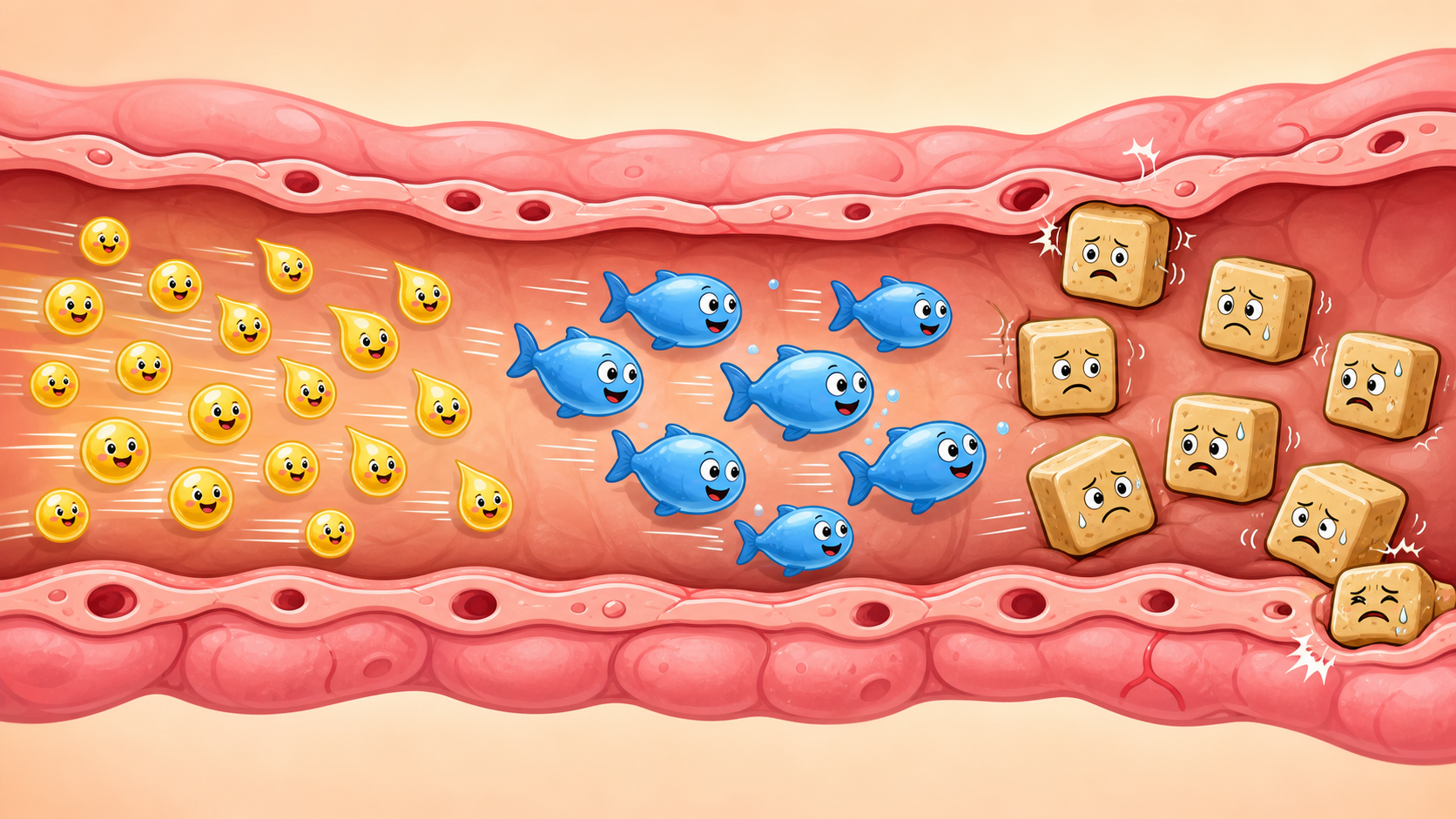
However, a highly purified, high-dose form of EPA tells a different story. The REDUCE-IT trial, detailed in a 2020 review in the Journal of Atherosclerosis and Thrombosis, tested a prescription-grade, EPA-only medication at a high dose of 4 grams per day. The study focused on patients who were already taking statins but still had high triglycerides (try-GLIS-er-ides), a type of fat in the blood. The high-dose EPA treatment reduced the risk of major cardiovascular events, like heart attacks and strokes, by 25 percent.
Why did pure EPA work when mixed fish oil did not? A 2024 review in Cardiovascular Research suggests that EPA has unique biological properties. It incorporates into the membranes of blood vessel cells, helping to stabilize arterial plaque and prevent it from rupturing. DHA, while beneficial for other organs, behaves differently in the cell membrane and may not offer the same targeted cardiovascular protection.
Related: The Science of Managing Cholesterol: What Research Actually Shows
DHA and Brain Health: Protecting Cognitive Function
While EPA takes the spotlight for heart health, DHA is the star when it comes to the brain. DHA makes up a massive portion of the physical structure of your brain and central nervous system.
A 2023 review in Current Opinion in Lipidology examined how DHA impacts cognitive decline and Alzheimer’s disease. The research shows that people who consume more fish or omega-3s have a lower risk of developing mild cognitive impairment.
Interestingly, timing and genetics play a major role. The review notes that DHA supplementation shows the most benefit when started before significant cognitive decline occurs. Patients who already have established Alzheimer’s disease do not typically regain memory function from taking DHA. Furthermore, people who carry the APOE4 gene, which increases the risk of Alzheimer’s, may have a harder time absorbing DHA into their brains and might benefit from higher intakes early in life.
Related: Can We Prevent Age-Related Cognitive Decline? What Science Actually Shows
EPA and Mental Health: Managing Depression
When researchers look at mental health, particularly depression, the balance of EPA and DHA becomes highly important.
A 2019 meta-analysis in Translational Psychiatry analyzed 26 clinical trials involving over 2,100 participants to see if omega-3s could improve symptoms of depression. The researchers found a clear pattern: supplements that contained mostly EPA (at least 60 percent of the total omega-3s) were effective at reducing depressive symptoms. Supplements that were purely DHA or mostly DHA did not show the same benefit.
The effective dose for depression appears to be relatively low. The study found that taking 1 gram per day or less of an EPA-dominant supplement provided clinical benefits.
How Omega-3s Fight Inflammation
To understand how fish oil helps conditions like rheumatoid arthritis and asthma, we have to look at how the body manages inflammation.
Your body uses different fats to create chemical messengers. Omega-6 fatty acids, which are abundant in Western diets (found in vegetable oils and processed foods), are often used by the body to create pro-inflammatory signals. Omega-3s like EPA and DHA do the opposite.
According to a 2017 review in Biochemical Society Transactions, EPA and DHA compete with omega-6 fats in the body. When you consume more omega-3s, your cells use them to produce specialized molecules called resolvins and protectins. Just as their names suggest, these molecules help resolve inflammation and protect tissues from damage.

Because of this mechanism, fish oil has been studied for autoimmune conditions. A 2015 review in Biochimica et Biophysica Acta notes that human trials consistently show benefits for rheumatoid arthritis, with patients often experiencing less joint stiffness and needing fewer pain medications. However, the dose matters. A 2013 review in the British Journal of Clinical Pharmacology points out that adults generally need more than 2 grams of EPA and DHA per day to trigger these anti-inflammatory effects.
Related: How an Anti-Inflammatory Diet Actually Affects Your Body
Skin Health and Aging
Omega-3 fatty acids also play a surprising role in dermatology. A 2018 review in Marine Drugs explored how fish oil impacts the skin.
When UV rays from the sun hit your skin, they cause oxidative stress and inflammation, leading to sunburn and long-term photoaging (wrinkles and sunspots). Research shows that both oral and topical applications of EPA and DHA can reduce this UV-induced inflammation. While fish oil is absolutely not a replacement for sunscreen, it appears to increase the skin’s baseline resistance to sunburn and helps protect collagen from breaking down.
Bioavailability: Does the Form of Fish Oil Matter?
If you decide to take a fish oil supplement, the chemical form of the oil affects how much your body actually absorbs. This concept is called bioavailability.
A 2025 comprehensive review in Progress in Lipid Research compared different forms of omega-3s. They found that absorption follows a specific order. Free fatty acids and phospholipids (often found in krill oil) are absorbed very well. Triglycerides (the natural form found in fish) are also absorbed effectively. However, many cheap supplements use a highly processed form called “ethyl esters,” which are absorbed poorly unless taken with a high-fat meal.
Who Benefits Or Needs Caution
Based on current research, different populations experience different effects from omega-3s:
- People with high triglycerides: May benefit from high-dose, EPA-specific formulations, often prescribed by a doctor.
- Older adults: May benefit from DHA to support cognitive function, especially if started before memory issues arise.
- People with rheumatoid arthritis: Often experience reduced joint stiffness with high doses (over 2 grams per day) of mixed EPA/DHA.
- People taking blood thinners: Should consult a doctor before taking high doses of fish oil, as omega-3s can have a mild blood-thinning effect.
- People seeking general heart attack prevention: Should know that low-dose, over-the-counter mixed supplements have largely failed to show preventive benefits in healthy people taking modern medications.
Common Questions About Fish Oil
Can I just eat fish instead of taking a supplement?
Yes. Eating fatty fish (like salmon, mackerel, and sardines) two to three times a week provides excellent amounts of highly absorbable EPA and DHA, plus beneficial proteins and minerals that pills lack.
Does fish oil cause bleeding?
Omega-3s do have a mild anti-clotting effect. While standard doses are generally safe, very high doses (over 4 grams a day) might increase bleeding risk, especially if you are already taking anticoagulant medications.
What is the difference between fish oil and krill oil?
Krill oil contains EPA and DHA bound in a “phospholipid” form, which research suggests is absorbed slightly faster by the body than the standard forms found in basic fish oil.
The Bottom Line / Takeaways
The science of fish oil is no longer a one-size-fits-all topic. We now know that EPA and DHA are distinct molecules with different jobs.
- EPA is strongly linked to cardiovascular protection (at high, purified doses) and improving symptoms of depression.
- DHA is the primary structural fat in the brain and is crucial for cognitive maintenance and infant development.
- Standard, low-dose fish oil supplements do not reliably prevent heart attacks in people already taking modern heart medications.
- To fight systemic inflammation, doses generally need to exceed 2 grams per day.
- The form of the supplement matters. Natural triglycerides and phospholipids are absorbed better than ethyl esters.
Quick Reference: Key Studies
| Study Focus | Key Finding | Source |
|---|---|---|
| Cardiovascular Health | High-dose, purified EPA (4g/day) reduced major cardiovascular events by 25% in statin-treated patients with high triglycerides. | PMID 31582621 |
| Cognitive Decline | DHA supplementation shows potential to slow cognitive aging, particularly when started early, though established Alzheimer’s does not typically reverse. | PMID 36637075 |
| Depression | Omega-3 supplements containing at least 60% EPA at doses of 1g/day or less significantly improved symptoms of depression. | PMID 31383846 |
| Inflammation | EPA and DHA generate resolvins and protectins that actively stop inflammation; doses over 2g/day are typically needed for clinical benefit in humans. | PMID 28900017 |
| Absorption (Bioavailability) | Free fatty acids, phospholipids, and natural triglycerides are absorbed significantly better than the ethyl ester forms found in some supplements. | PMID 39736417 |
| Hemodialysis Patients | 4g/day of mixed omega-3s significantly lowered serious cardiovascular events in patients receiving maintenance hemodialysis. | PMID 41201837 |
Last updated: June 2026
This article synthesizes findings from peer-reviewed research. It is for educational purposes only and does not constitute medical advice. Consult a healthcare provider before starting any new regimen.


Leave a Reply