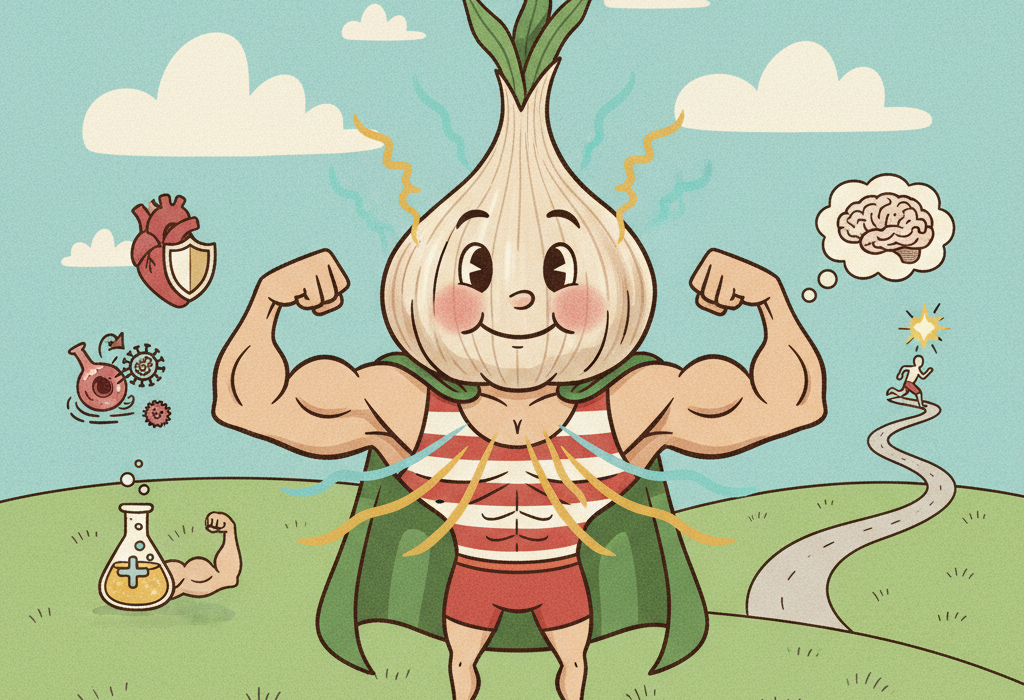
Garlic is a staple in kitchens worldwide, but its history as a medicinal remedy stretches back thousands of years. Ancient texts from Egypt, Greece, and India all describe garlic being used to treat various ailments, strengthen laborers, and improve heart health. Today, garlic supplements are incredibly popular, often marketed to lower cholesterol, reduce blood pressure, and boost the immune system.
But do these supplements actually work? The short answer is yes, but with important nuances. Scientific research shows that garlic supplements consistently lower blood pressure in people with hypertension and provide modest benefits for arterial health. However, its effects on cholesterol are mixed, and it is better at reducing the duration of a cold than preventing you from catching one in the first place.
Here is a breakdown of what peer-reviewed science actually says about garlic supplements, how they work in the body, and the important differences between raw and aged garlic.
What the Research Shows About Cardiovascular Health
Most modern research on garlic focuses on the cardiovascular system. Overall, the evidence points to measurable benefits for the heart and blood vessels, though it is not a replacement for standard medical treatments.
Blood Pressure Reduction
One of the most consistent findings in garlic research is its ability to lower blood pressure. A 2024 review in Nutrients analyzed multiple clinical trials and found that garlic supplements reduced systolic blood pressure (the top number) by 7 to 16 millimeters of mercury (mmHg) and diastolic blood pressure (the bottom number) by 5 to 9 mmHg.
Interestingly, this benefit primarily occurs in people who already have high blood pressure. In people with normal blood pressure, garlic supplements do not cause a dangerous drop in numbers. The blood pressure reductions seen in these studies are comparable to some standard anti-hypertensive medications, making garlic a potential complementary approach for managing hypertension.
Cholesterol Management
The evidence for garlic lowering cholesterol is a bit more complicated. While many animal studies show dramatic reductions in cholesterol, human clinical trials have produced mixed results.
A 2025 review in Phytomedicine concluded that taking garlic supplements for more than two months can effectively reduce total cholesterol and low-density lipoprotein (LDL) cholesterol in people with mild to moderately high levels. However, a 2024 review in the American Journal of Cardiovascular Drugs noted that the reductions are generally modest and sometimes inconsistent across different studies.
Related: What Science Actually Says About Managing Cholesterol: What Research Actually Shows
Arterial Plaque and Stiffness
Beyond basic blood pressure and cholesterol numbers, scientists also look at how garlic affects the physical health of blood vessels.
Research published in The Journal of Nutrition highlighted several small but rigorous studies showing that Aged Garlic Extract (AGE) can slow the progression of coronary artery calcium. This is a measure of plaque buildup in the arteries of the heart. The same review noted that AGE improved pulse wave velocity, which is a test that measures arterial stiffness. Softer, more flexible arteries are a key indicator of cardiovascular health.
What the Research Shows About Immunity and Metabolism
Many people take garlic during the winter months to ward off illness. The scientific evidence supports its use for symptom management rather than total prevention.
Cold and Flu Symptoms
A 2022 systematic review in Nutrients looked at dietary supplements for immune health. When evaluating garlic, researchers found that people taking garlic supplements were just as likely to catch a cold as those taking a placebo. However, the people taking garlic experienced a significantly shorter duration of illness and less severe symptoms. In one study, the garlic group missed significantly fewer days of work compared to the placebo group.
Metabolic Health and PCOS
Garlic may also help regulate broader metabolic functions. A 2025 randomized controlled trial in the Journal of Health, Population, and Nutrition studied women with polycystic ovary syndrome (PCOS) and metabolic syndrome. Participants taking 500 milligrams of garlic twice daily for eight weeks saw significant reductions in fasting blood sugar, triglycerides, and C-reactive protein, which is a marker of inflammation. They also experienced improvements in weight and body mass index compared to the placebo group.
Related: What Blood Tests for Inflammation Actually Tell Us About Your Health
Aged Garlic vs. Raw Garlic Supplements
Not all garlic supplements are created equal. You will typically find two main types on store shelves: standard garlic powder (made from dried, raw garlic) and Aged Garlic Extract (AGE).
Science increasingly favors AGE for cardiovascular health. AGE is created by soaking sliced raw garlic in a mixture of water and alcohol for up to 20 months at room temperature. This aging process changes the chemical makeup of the garlic.
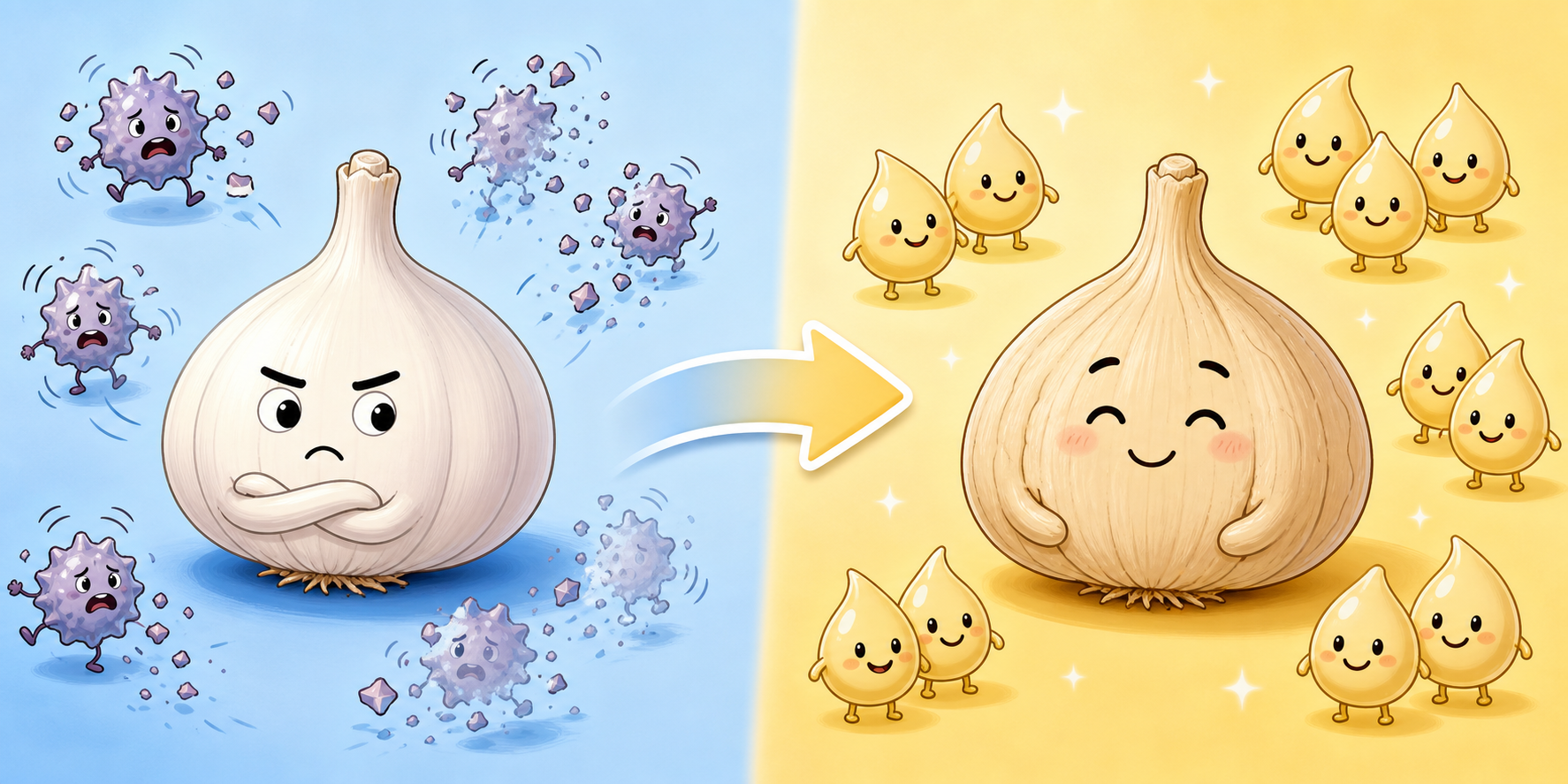
Raw garlic contains a compound called Allicin (AL-ih-sin), which is responsible for the sharp odor and many of the immediate antibacterial effects of fresh garlic. However, allicin is highly unstable and breaks down quickly in the body and in supplement capsules.
The aging process converts this unstable allicin into a highly stable, odorless compound called S-allylcysteine (es-al-ill-SIS-teen), or SAC. A 2016 study in the Journal of Medicinal Food compared the two directly. Researchers gave hypercholesterolemic patients either raw garlic or aged garlic for 13 weeks. While neither dramatically changed cholesterol levels in this specific study, the aged garlic significantly reduced markers of oxidative stress and lipid peroxidation in the blood. The raw garlic did not achieve these same antioxidant effects.
How This Might Work
Scientists have identified several biological mechanisms that explain how garlic changes the body:
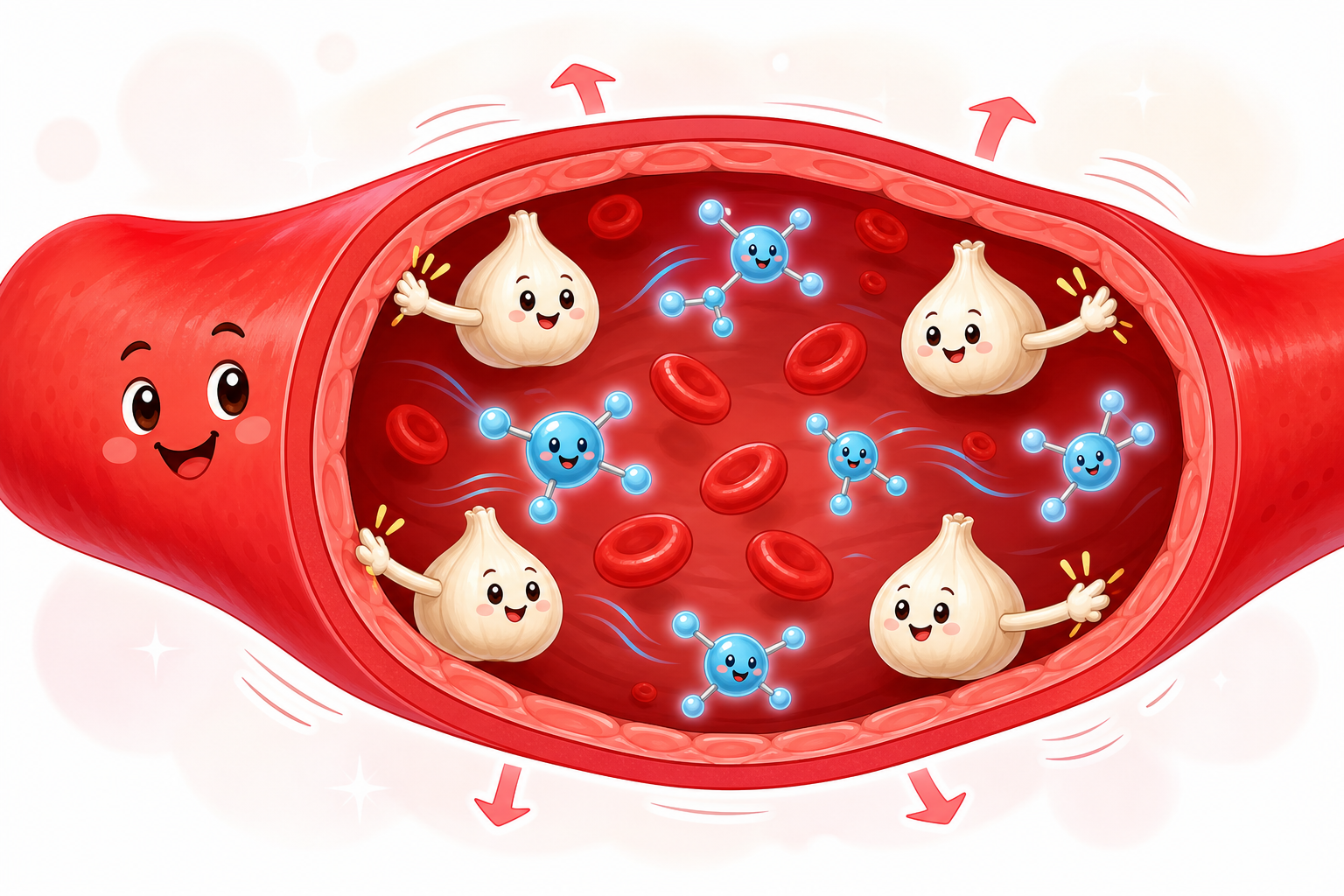
- Boosting Nitric Oxide: Garlic compounds stimulate the production of Nitric oxide (NYE-trik OX-ide), a signaling molecule that tells the smooth muscles around blood vessels to relax. When blood vessels widen, blood pressure goes down.
- Inhibiting ACE Activity: Similar to common blood pressure medications called ACE inhibitors, garlic appears to mildly block the angiotensin-converting enzyme, preventing blood vessels from constricting too tightly.
- Preventing Ferroptosis: A 2024 study in Frontiers in Pharmacology found that allicin helps prevent Ferroptosis (fair-op-TOE-sis). This is a specific type of cell death driven by iron and oxidative stress, which contributes to the buildup of plaque in the arteries.
- Improving the Microbiome: Emerging research suggests that garlic acts as a prebiotic, promoting the growth of healthy gut bacteria that produce short-chain fatty acids, which naturally regulate cholesterol and inflammation.
Who Benefits Or Needs Caution
While garlic is a natural food, concentrated supplements have powerful biological effects that require consideration.
Who might benefit most:
- Individuals with mild to moderate hypertension.
- People looking to improve arterial flexibility and reduce oxidative stress.
- Those seeking to reduce the duration of winter colds.
Who needs caution:
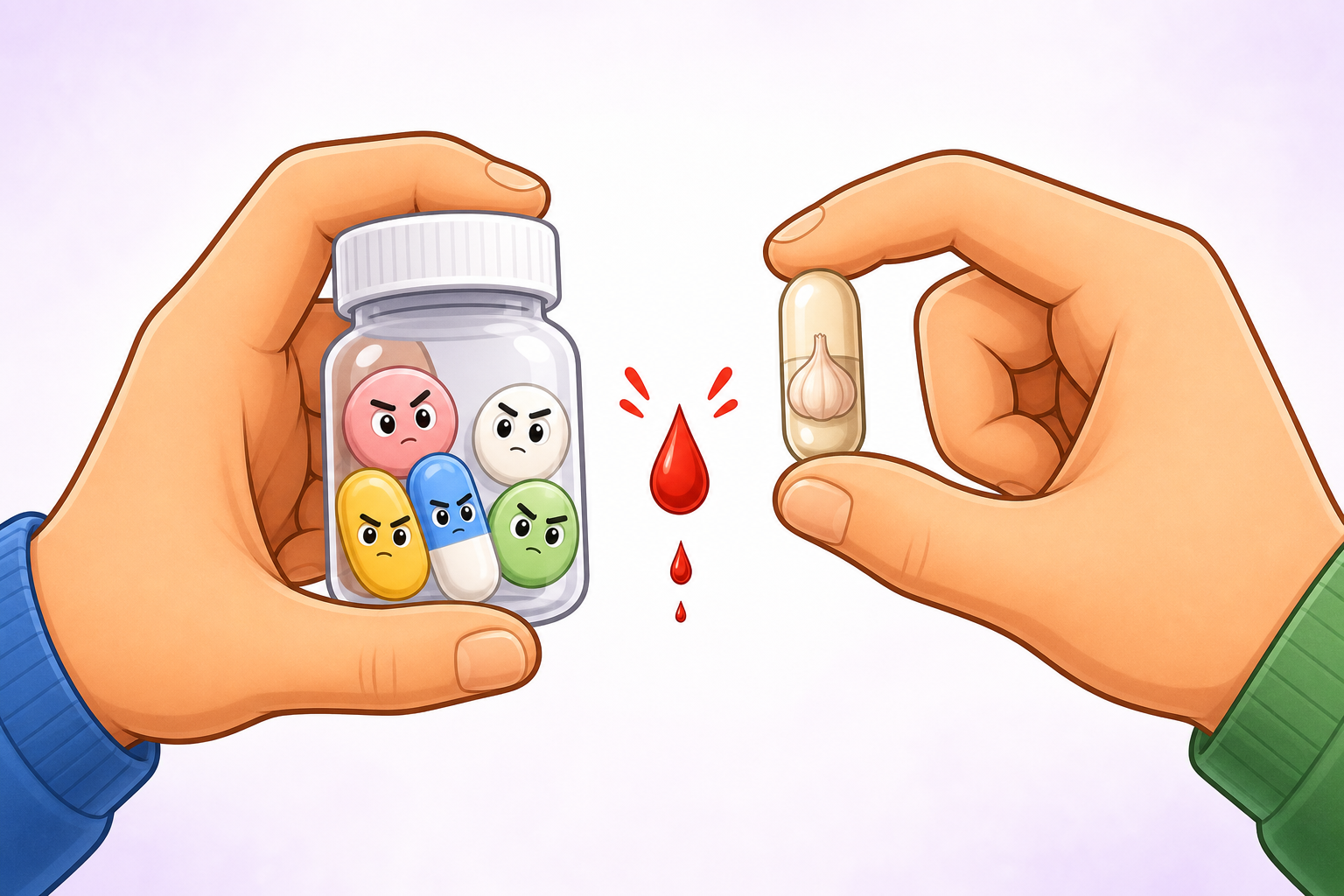
- People on blood thinners: Garlic naturally inhibits platelet aggregation (blood clotting). A 2025 review in the International Journal of Molecular Sciences warns that combining garlic supplements with anticoagulant medications can significantly increase the risk of bleeding.
- People with upcoming surgeries: Because of the bleeding risk, doctors generally recommend stopping garlic supplements two weeks before any scheduled surgery.
- People with sensitive stomachs: Raw garlic supplements can cause heartburn, acid reflux, and gastrointestinal distress. Aged garlic extract is generally much gentler on the stomach.
Common Questions About Garlic Supplements
Can I just eat raw garlic instead of taking a supplement?
Yes, eating raw garlic provides cardiovascular and antioxidant benefits. However, to get the therapeutic doses used in clinical trials, you would need to eat several cloves of raw, crushed garlic every day. For many people, this causes severe stomach upset and intense body odor, making standardized supplements a more practical choice.
Does cooking garlic destroy its benefits?
Heat deactivates the enzyme required to form allicin. If you are cooking with garlic, scientists recommend crushing or chopping the garlic and letting it sit at room temperature for 10 minutes before applying heat. This allows the beneficial compounds to fully form and become more heat-resistant.
Why do garlic supplements sometimes fail in clinical trials?
Garlic supplement quality varies wildly. Many commercial supplements lack standardized doses of active ingredients like SAC or allicin. When studies use poor-quality supplements, the results often show no benefit.
The Bottom Line
Garlic is not a miracle cure, but it is a scientifically validated tool for supporting cardiovascular and metabolic health. The strongest evidence supports its use for lowering blood pressure in hypertensive individuals and reducing oxidative stress in the arteries.
While it may modestly lower cholesterol and shorten the duration of a cold, results in these areas are less dramatic. For those looking to add a garlic supplement to their routine, Aged Garlic Extract (AGE) currently has the most robust clinical backing for safety, tolerability, and cardiovascular benefits.
Quick Reference: Key Studies
| Study Focus | Key Finding | Source |
|---|---|---|
| Blood Pressure | Garlic reduces systolic BP by 7-16 mmHg and diastolic by 5-9 mmHg in hypertensive patients. | PMID 39275211 |
| Aged vs. Raw Garlic | Aged garlic extract significantly reduced oxidative stress and lipid peroxidation over 13 weeks; raw garlic did not. | PMID 27627579 |
| Arterial Health | Aged garlic extract slowed the progression of coronary artery calcium and improved arterial flexibility. | PMID 26764327 |
| Immune Function | Garlic supplements reduced the duration and severity of cold symptoms, though they did not prevent initial infection. | PMID 36364865 |
| Metabolic Syndrome | 8 weeks of garlic supplementation improved blood sugar, triglycerides, and inflammation in women with PCOS. | PMID 40770379 |
| Bleeding Risk | Garlic has anti-platelet properties that can increase bleeding risk when combined with blood thinners. | PMID 41155474 |
Last updated: June 2026
This article synthesizes findings from peer-reviewed research. It is for educational purposes only and does not constitute medical advice. Consult a healthcare provider before starting any new regimen.


Leave a Reply