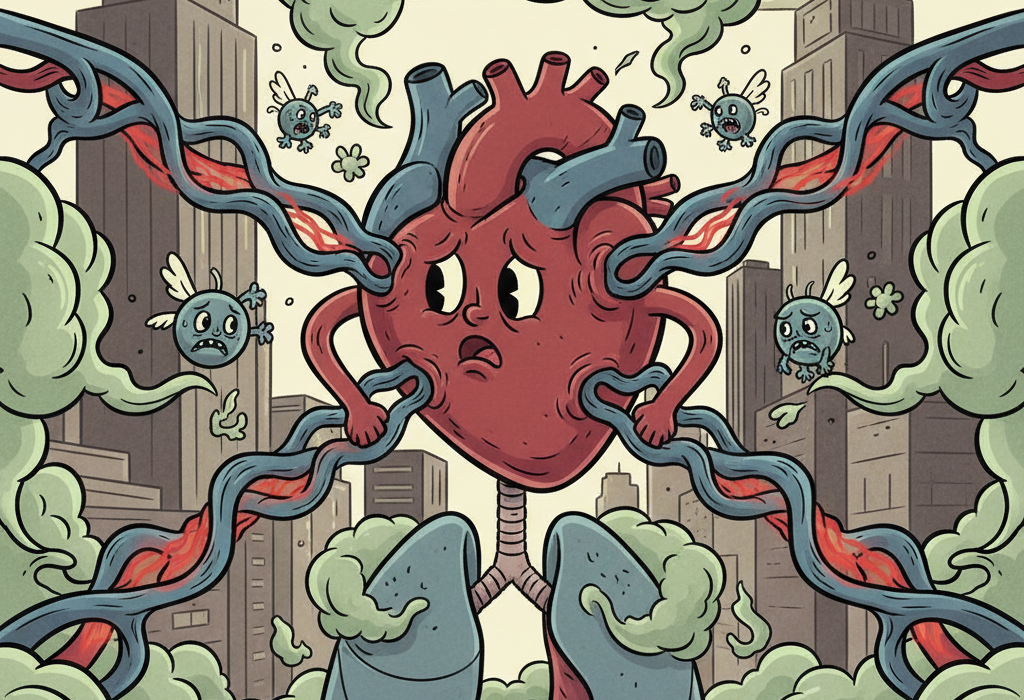
Your lungs are a vast network of tiny, delicate blood vessels responsible for picking up oxygen and delivering it to the rest of your body. In healthy lungs, these vessels are flexible and open. But for people with pulmonary arterial hypertension (PULL-moh-nair-ee ar-TEER-ee-ul hy-per-TEN-shun), or PAH, these vessels become thick, stiff, and narrow.
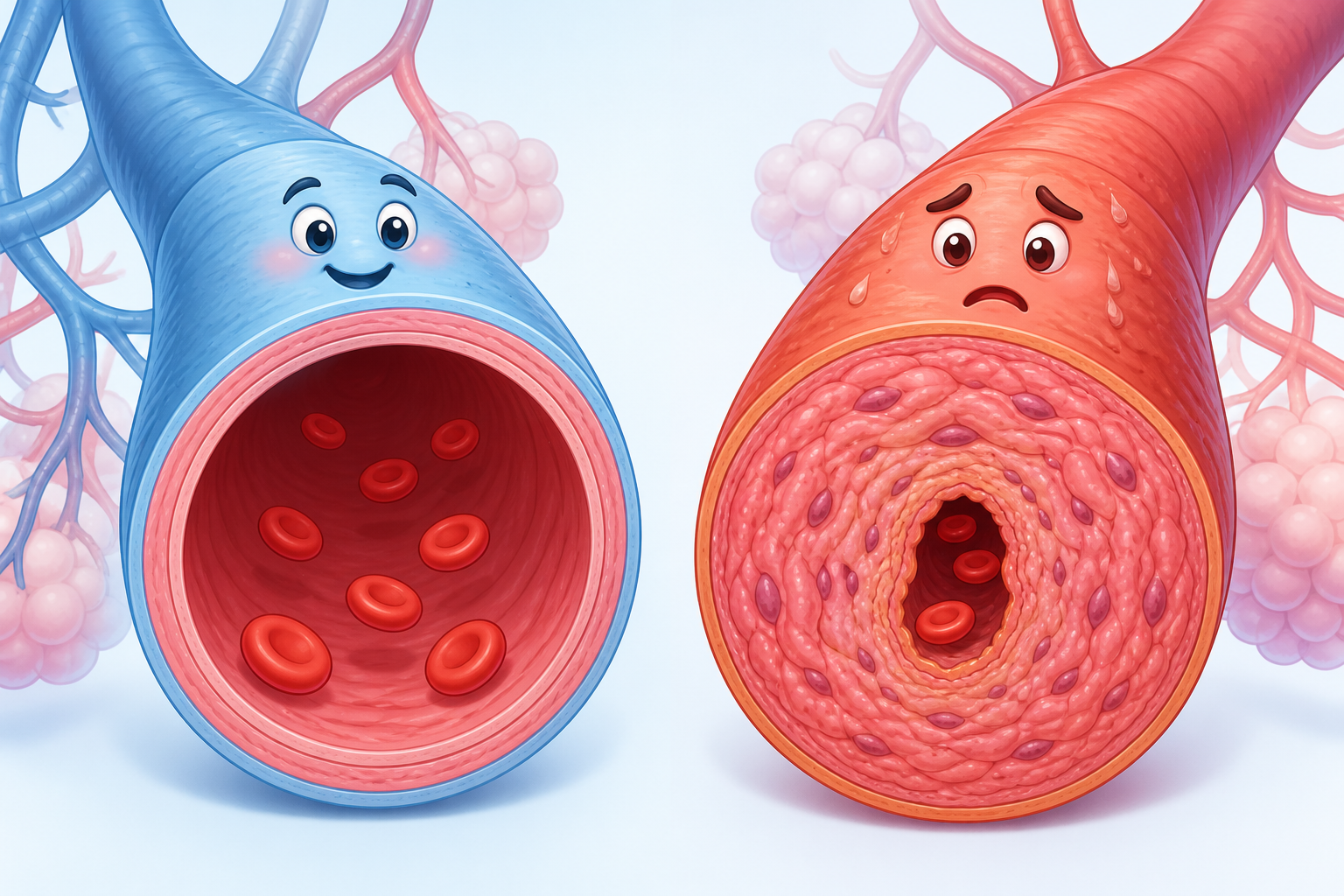
This narrowing forces the right side of the heart to pump much harder to push blood through the lungs, eventually leading to heart failure. While we have medications to help manage the symptoms of PAH by relaxing the blood vessels, scientists are still searching for ways to stop or reverse the structural damage itself.
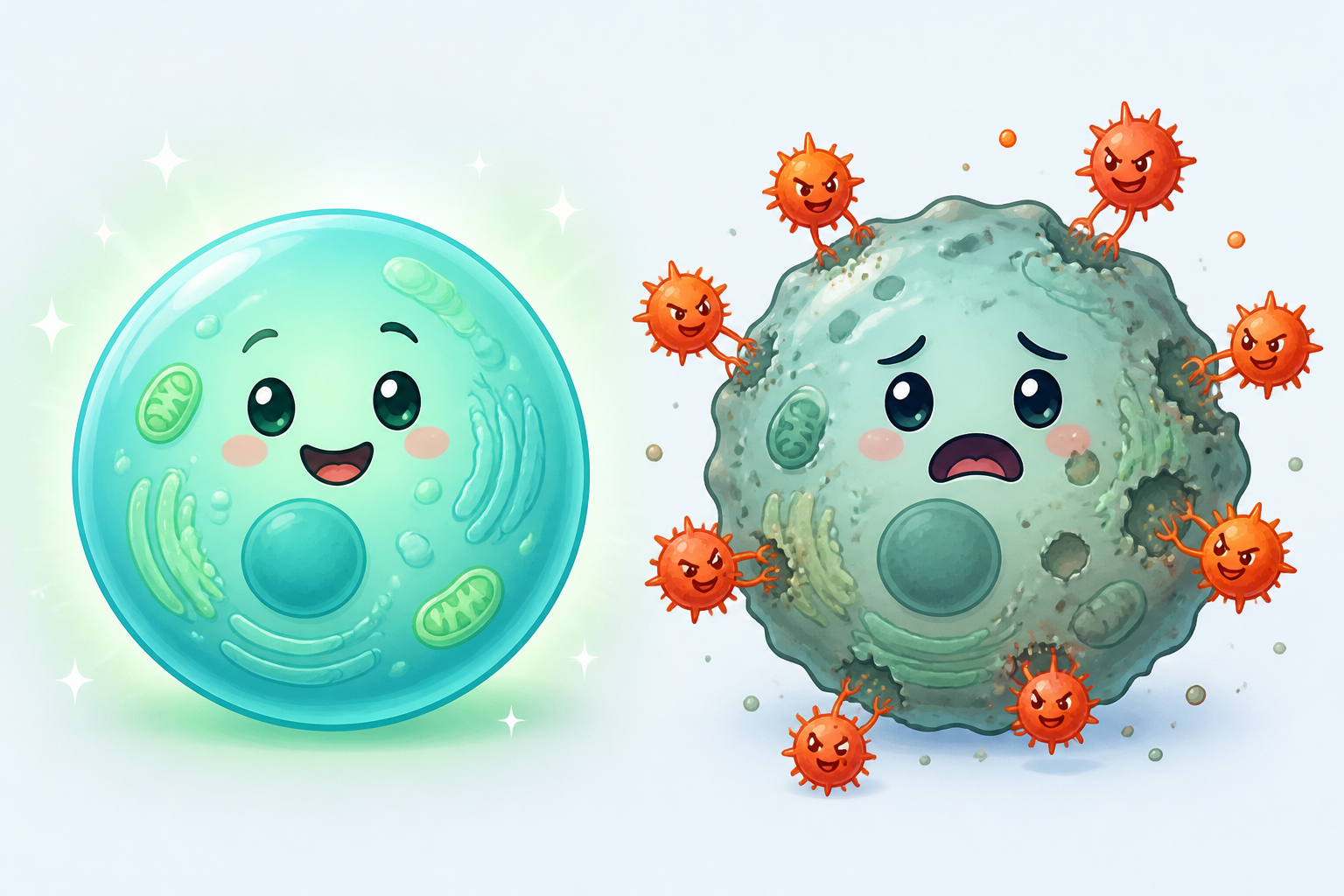
To find better treatments, researchers have been looking closely at the cellular level. One of the most consistent findings in PAH is the presence of oxidative stress (OX-ih-day-tiv stress). You can think of oxidative stress as a form of biological “rust” that damages cells over time.
This article explores what current peer-reviewed research tells us about how oxidative stress alters lung blood vessels, why it happens, and how future therapies might target this process.
Common Questions About Pulmonary Hypertension and Oxidative Stress
Does oxidative stress cause pulmonary hypertension?
Research shows a strong association between high levels of oxidative stress and the development of PAH. While it is not the only cause, oxidative stress acts as a major driver that damages blood vessels and triggers them to thicken.
Can taking antioxidant supplements cure PAH?
No. While oxidative stress is a problem in PAH, everyday antioxidant supplements like vitamin C or vitamin E have not been shown to cure or reverse the disease. Scientists are currently testing highly targeted, prescription-level therapies that work directly inside lung cells.
Why do blood vessels thicken in PAH?
When the inner lining of the blood vessel is damaged by oxidative stress, the muscle cells surrounding the vessel panic and begin to multiply rapidly. This overgrowth narrows the space inside the vessel, making it harder for blood to flow.
How This Might Work: The Biology of Cellular Rust
To understand how oxidative stress impacts the lungs, we have to look inside the cell.
Our cells are powered by mitochondria (my-toh-KON-dree-uh), which act as microscopic engines. As these engines burn fuel to create energy, they naturally produce exhaust. In biology, this exhaust comes in the form of free radicals, specifically reactive oxygen species (ROS).
Normally, the body has built-in antioxidants that sweep up these free radicals before they cause harm. However, when mitochondria malfunction, they produce too many free radicals. When the amount of free radicals overwhelms the body’s natural cleanup crew, you get oxidative stress.

Related: How Cortisol and Antioxidants Control Your Stress Response
In PAH, this biological rust heavily targets endothelial cells (en-doh-THEE-lee-ul cells). These are the cells that form the smooth, non-stick inner lining of blood vessels. A 2022 review in Molecules explains that oxidative stress damages the DNA inside these endothelial cells, causing them to malfunction.
When endothelial cells are damaged, they lose their ability to regulate the blood vessel. They stop producing enough nitric oxide (a molecule that keeps vessels relaxed) and start sending out distress signals. These signals tell the surrounding smooth muscle cells to multiply, leading to the thick, stiff vessels characteristic of PAH.
What the Research Shows: The Vicious Cycle of PAH
Scientists have identified several interconnected ways that oxidative stress drives the progression of pulmonary hypertension.
Metabolic Reprogramming (The Warburg Effect)
When lung cells are under oxidative stress, they change how they consume energy. A 2023 study in Redox Biology notes that endothelial cells in PAH undergo “metabolic reprogramming.”
Instead of using their mitochondria to make energy efficiently, the cells start fermenting glucose, a process normally reserved for when oxygen is very low. This shift is known as the Warburg effect. By changing their energy source, the cells become highly resistant to dying and start multiplying rapidly, much like tumor cells. This metabolic shift directly contributes to the narrowing of the blood vessels.
Cellular Senescence (Premature Aging)
Oxidative stress also causes lung cells to age prematurely, a process called senescence (seh-NESS-ens).
A 2021 review in Cells details how severe DNA damage from oxidative stress forces lung cells into a senescent state. Instead of dying off naturally, these “zombie cells” stick around and secrete a toxic mix of inflammatory signals. This constant state of inflammation further irritates the blood vessel walls and promotes more thickening.
Related: What Science Actually Says About Senolytics and Anti-Aging
Genetic Vulnerabilities and Protective Proteins
Some people are genetically predisposed to PAH. Mutations in a gene called BMPR2 are a known risk factor. Research shows that BMPR2 normally helps protect cells from stress. When it is mutated, cells are much more vulnerable to oxidative damage.
A 2021 study in Circulation Research found that BMPR2 normally works alongside two protective proteins called PPARγ and p53. Together, they repair DNA and keep blood vessels healthy. In PAH, oxidative stress disrupts this protective trio, allowing DNA damage to accumulate and vessels to degrade.
Similarly, a 2023 study in Scientific Reports identified that a lack of a protein called GATA6 in PAH patients leads to a severe drop in the body’s natural antioxidant enzymes, leaving the lungs defenseless against free radicals.
The Role of the Immune System
Oxidative stress does not act alone; it works hand-in-hand with the immune system. Macrophages (MACK-roh-fayj), a type of white blood cell that normally acts as a garbage collector for the body, can become confused in PAH.
A 2023 study in Redox Biology found that a specific genetic regulator (Ythdf2) causes macrophages to suppress their own antioxidant defenses. This forces the macrophages to release inflammatory signals instead of healing the tissue.
Furthermore, a 2022 study in Cells demonstrated that oxidative stress and inflammation cause lung cells to secrete Nerve Growth Factor (NGF). While NGF is normally used for nerve health, in the lungs, it acts as a fertilizer that makes smooth muscle cells grow out of control.
Who Needs Caution: Newborns and High Altitudes
While PAH is often a chronic condition in adults, oxidative stress plays a unique role in two specific populations.
Persistent Pulmonary Hypertension of the Newborn (PPHN)
When a baby is born, their lungs must instantly take over the job of breathing. Blood vessels in the lungs must relax and open up. In some babies, this transition fails, leading to PPHN.
A 2022 review in Seminars in Fetal & Neonatal Medicine highlights a difficult medical balancing act. Babies with PPHN need extra oxygen to survive. However, delivering 100% pure oxygen can actually generate massive amounts of free radicals, causing severe oxidative stress. This stress can damage the delicate newborn blood vessels and make the hypertension worse. Because a newborn’s antioxidant defense system is still underdeveloped, doctors must very carefully manage oxygen levels to provide enough air without causing further oxidative damage.
High-Altitude Pulmonary Hypertension (HAPH)
People who live at or travel to extreme altitudes are exposed to chronic low oxygen (hypoxia). A 2025 review in Clinical and Experimental Medicine explains that hypoxia directly triggers oxidative stress in the lungs. The body tries to compensate for the lack of oxygen by constricting lung blood vessels, which over time leads to structural remodeling and high-altitude pulmonary hypertension.
Emerging Therapies Targeting Oxidative Stress
Because oxidative stress is so central to PAH, scientists are actively testing new ways to target it. It is important to note that most of these therapies are currently being tested in animal models or isolated human cells, and are not yet available as approved PAH treatments.
- Repurposing Diabetes Drugs: A 2024 study in Acta Pharmacologica Sinica found that Canagliflozin, a common medication for type 2 diabetes, helped alleviate PAH in animal models. It worked by activating PPARγ, a protein that resists oxidative stress and stops smooth muscle cells from multiplying.
- DNA Repair Activators: In the previously mentioned Circulation Research study, researchers used an experimental drug called Nutlin-3. This drug stabilized the p53 protein, helping lung cells repair their damaged DNA and actually reversing pulmonary hypertension in mice.
- Stem Cell Secretions: A 2025 study in the Journal of Cellular Physiology tested a liquid medium created by induced pluripotent stem cells. When given to rats with PAH, this stem cell “broth” successfully lowered oxidative stress, reduced vessel wall thickness, and improved heart function.
- Targeting Inflammation: Researchers are also testing novel compounds to calm the immune system. A 2024 study in Aging found that a peptide called Phoenixin-20 reduced both inflammation and oxidative stress in rats, improving their lung hemodynamics. Similarly, the Scientific Reports study found that an existing multiple sclerosis drug (Dimethyl fumarate) reversed oxidative stress and improved PAH in mice by restoring the GATA6 pathway.
Related: How Your Body Actually Detoxifies: The Science of Cellular Cleanup
The Bottom Line
Pulmonary arterial hypertension is a complex disease where the blood vessels in the lungs become thick and stiff. Current science strongly indicates that oxidative stress, an imbalance of free radicals in the body, is a primary driver of this damage.
- What we know: Oxidative stress damages the DNA of lung blood vessels, alters how cells consume energy, and triggers premature cellular aging. This causes the vessel walls to overgrow and narrow.
- What is uncertain: We do not yet know the perfect way to stop this process in humans. Standard antioxidant vitamins are not powerful or targeted enough to reverse the disease.
- How confident we are: The evidence linking oxidative stress to PAH vessel damage is very strong, supported by extensive genetic, cellular, and animal research.
While there is currently no cure for PAH, the discovery of exactly how oxidative stress damages lung vessels is providing scientists with highly specific targets for future medications.
Quick Reference: Key Studies
| Study Focus | Key Finding | Source |
|---|---|---|
| High-Altitude PAH | Chronic low oxygen at high altitudes triggers oxidative stress and inflammation, leading to vessel remodeling. | PMID 40063280 |
| Idiopathic PAH Biomarkers | Identified two specific genes (COX6B1 and HMGCL) linked to mitochondrial oxidative stress that could serve as diagnostic markers. | PMID 41365992 |
| Cellular Stress Granules | Oxidative stress causes cells to form “stress granules” that promote abnormal cell growth; blocking this process improved outcomes in animal models. | PMID 39513903 |
| Phoenixin-20 Therapy | An experimental peptide reduced oxidative stress, inflammation, and right heart strain in rats with PAH. | PMID 38517365 |
| Canagliflozin Repurposing | A common diabetes drug reduced lung vessel thickening in animals by activating the protective PPARγ pathway. | PMID 38719955 |
| Metabolic Reprogramming | Lung cells under oxidative stress change how they use energy (the Warburg effect), causing them to multiply rapidly. | PMID 37392518 |
| Macrophage Dysfunction | The Ythdf2 gene suppresses antioxidant defenses in immune cells, worsening PAH in mice. | PMID 36801705 |
| GATA6 Deficiency | A lack of the GATA6 protein leaves lungs defenseless against oxidative stress; the drug Dimethyl fumarate reversed this in mice. | PMID 37087509 |
| Newborn PAH (PPHN) | Delivering 100% oxygen to newborns with PPHN can cause severe oxidative stress, highlighting the need for careful oxygen management. | PMID 35473693 |
| Antioxidant Review | A comprehensive review of how DNA damage and ROS drive PAH, and the current status of antioxidant clinical trials. | PMID 35744848 |
| Nerve Growth Factor | Oxidative stress causes lung cells to release NGF, which acts as a fertilizer for abnormal blood vessel growth. | PMID 36139373 |
| DNA Repair via Nutlin-3 | Activating the p53 protein with the drug Nutlin-3 helped lung cells repair DNA and reversed PAH in mice. | PMID 33322916 |
| Cellular Senescence | Oxidative stress causes lung cells to age prematurely, turning them into inflammatory “zombie cells” that drive vessel thickening. | PMID 34943963 |
| Stem Cell Therapy | Liquid medium derived from stem cells successfully reduced oxidative stress and vessel remodeling in a rat model of PAH. | PMID 40819237 |
Last updated: November 2026
This article synthesizes findings from peer-reviewed research. It is for educational purposes only and does not constitute medical advice. Consult a healthcare provider before starting any new regimen.
Leave a Reply